Cultured Pasteurized Cream And Enzymes
Auto-generated content. This description was generated automatically and is pending editorial review. Inaccuracies are possible. Found a mistake? Contact us.
What it is
Cultured pasteurized cream is made by adding a starter culture of bacteria to pasteurized cream. These bacteria ferment the lactose (sugar) in the cream, producing lactic acid, which thickens the cream and gives it a tangy flavor. Enzymes are often added to aid in the process or to achieve a desired texture.
Why it's used
It is used as a dairy product itself, often found in sour cream and other cultured dairy products. It adds a rich, creamy texture and a characteristic tangy flavor to foods.
Health notes
Cultured pasteurized cream is generally recognized as safe (GRAS) by the FDA when used as intended. It is a source of fat and some vitamins. International bodies like JECFA have evaluated similar dairy products. No significant health controversies are associated with its typical consumption.
Allergen info
Cultured pasteurized cream is derived from milk, which is one of the FDA's major allergens. It does not contain gluten.
Products containing Cultured Pasteurized Cream And Enzymes
Compare products →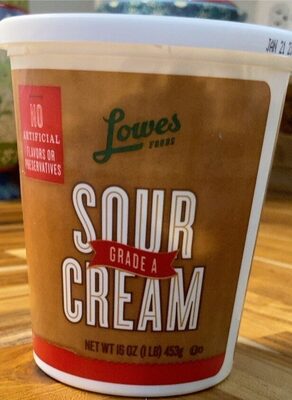 Lowe's Food Stores, Inc.
Sour Cream
200kcal
3.3Protein
16.7Fat
3.3Carbs
Lowe's Food Stores, Inc.
Sour Cream
200kcal
3.3Protein
16.7Fat
3.3Carbs
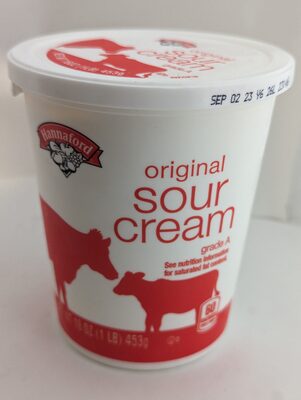 Hannaford Bros. Co.
Original Sour Cream, Original
200kcal
3.3Protein
16.7Fat
3.3Carbs
Hannaford Bros. Co.
Original Sour Cream, Original
200kcal
3.3Protein
16.7Fat
3.3Carbs