Milled White Basmati Rice
Auto-generated content. This description was generated automatically and is pending editorial review. Inaccuracies are possible. Found a mistake? Contact us.
What it is
Milled white Basmati rice is a variety of long-grain rice, known for its distinct aroma and fluffy texture when cooked. It is a type of polished rice, meaning the outer husk, bran, and germ have been removed through milling. This process results in a longer shelf life and a softer texture but removes some nutrients and fiber.
Why it's used
White Basmati rice is a staple grain used globally as a side dish, in pilafs, fried rice, and other savory dishes. Manufacturers use it as a carbohydrate base, providing bulk and a neutral flavor that pairs well with many ingredients. It is commonly found in packaged rice blends, ready-to-eat meals, and ethnic food products.
Health notes
Milled white rice is primarily a source of carbohydrates. The milling process removes fiber and some B vitamins, so it is often enriched with thiamin, niacin, and iron. The U.S. Food and Drug Administration (FDA) considers rice to be Generally Recognized As Safe (GRAS). International bodies like the Joint FAO/WHO Expert Committee on Food Additives (JECFA) have evaluated rice. While rice is a staple for many, diets very high in refined grains like white rice may be associated with increased risk of type 2 diabetes, according to some peer-reviewed reviews.
Allergen info
Not a major allergen. Rice does not contain gluten.
Products containing Milled White Basmati Rice
Compare products →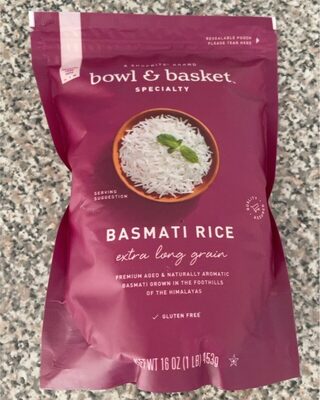 Wakefern Food Corporation
Basmati Extra Long Grain Rice, Basmati
360kcal
8Protein
2Fat
76Carbs
Wakefern Food Corporation
Basmati Extra Long Grain Rice, Basmati
360kcal
8Protein
2Fat
76Carbs
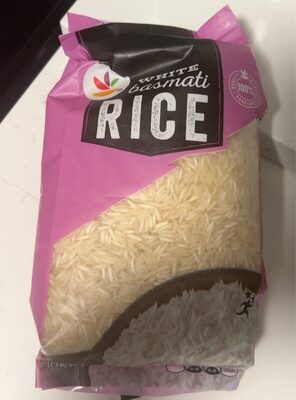 Ahold USA, Inc.
White Basmati Rice, White
333kcal
8.9Protein
0Fat
71.1Carbs
Ahold USA, Inc.
White Basmati Rice, White
333kcal
8.9Protein
0Fat
71.1Carbs
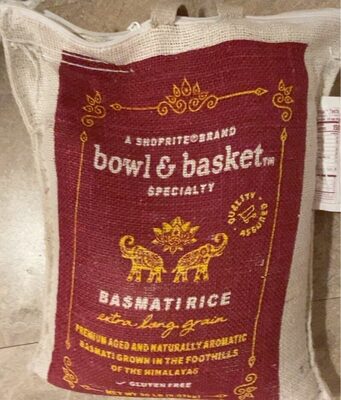 Wakefern Food Corporation
Specialty, Basmati Extra Long Grain Rice, Basmati
333kcal
8.9Protein
0Fat
71.1Carbs
Wakefern Food Corporation
Specialty, Basmati Extra Long Grain Rice, Basmati
333kcal
8.9Protein
0Fat
71.1Carbs
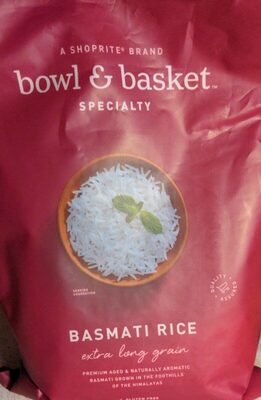 Wakefern Food Corporation
Specialty, Basmati Extra Long Grain Rice, Basmati
333kcal
8.9Protein
0Fat
71.1Carbs
Wakefern Food Corporation
Specialty, Basmati Extra Long Grain Rice, Basmati
333kcal
8.9Protein
0Fat
71.1Carbs
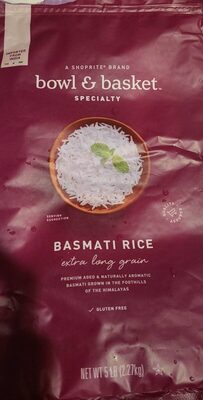 Wakefern Food Corporation
Specialty, Basmati Extra Long Grain Rice, Basmati
333kcal
8.9Protein
0Fat
71.1Carbs
Wakefern Food Corporation
Specialty, Basmati Extra Long Grain Rice, Basmati
333kcal
8.9Protein
0Fat
71.1Carbs