Organic Licorice Extract
Auto-generated content. This description was generated automatically and is pending editorial review. Inaccuracies are possible. Found a mistake? Contact us.
What it is
Organic licorice extract comes from the root of the licorice plant (Glycyrrhiza glabra). The root is dried, ground, and then extracted using water or alcohol to create a concentrated liquid or powder. This extract contains glycyrrhizin, which gives licorice its characteristic sweet flavor and aroma.
Why it's used
Manufacturers use organic licorice extract primarily as a flavoring agent to impart a sweet, distinct licorice taste. It is also used as a natural sweetener due to its intense sweetness. You can find it in candies, baked goods, beverages, and some herbal supplements.
Health notes
Organic licorice extract is generally recognized as safe (GRAS) by the FDA for use as a food flavoring. However, the main active compound, glycyrrhizin, can cause adverse effects like increased blood pressure and lowered potassium levels when consumed in very large amounts over extended periods. EFSA has evaluated licorice and its constituents. Due to potential health effects from excessive consumption, moderation is advised.
Allergen info
Not a major allergen. Licorice extract is derived from a plant root and is not related to the nine FDA major allergens or gluten.
Products containing Organic Licorice Extract
Compare products →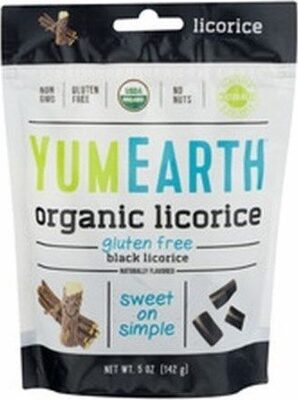 YummyEarth Inc.
Organic Black Licorice
333kcal
3.3Protein
3.3Fat
76.7Carbs
YummyEarth Inc.
Organic Black Licorice
333kcal
3.3Protein
3.3Fat
76.7Carbs
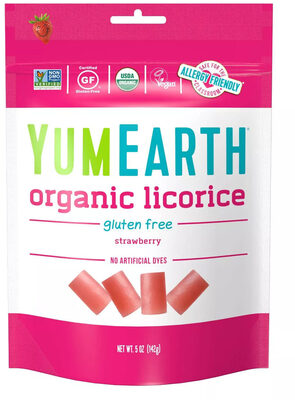 YummyEarth Inc.
Strawberry Organic Licorice, Strawberry
High in added sugars — 32% DV per serving
367kcal
3.3Protein
3.3Fat
83.3Carbs
YummyEarth Inc.
Strawberry Organic Licorice, Strawberry
High in added sugars — 32% DV per serving
367kcal
3.3Protein
3.3Fat
83.3Carbs