Basil Seed
Auto-generated content. This description was generated automatically and is pending editorial review. Inaccuracies are possible. Found a mistake? Contact us.
What it is
Basil seeds are the tiny, black seeds of the Ocimum basilicum plant, commonly known as sweet basil. When soaked in water, they form a gelatinous, translucent coating, similar to chia seeds. They are a traditional ingredient in many Asian cuisines and beverages.
Why it's used
Basil seeds are often used as a textural ingredient and thickener in beverages, puddings, and desserts. Their unique gelling property makes them appealing for drinks like iced teas, fruit juices, and smoothies, adding a tapioca-like texture. They can also be used as a garnish or in jams and jellies.
Health notes
Basil seeds are generally recognized as safe (GRAS) by the FDA for use in food. They are a source of fiber and can absorb liquid, which may contribute to feelings of fullness. International bodies like JECFA have evaluated basil seeds, but no specific numeric limits were set. Evidence on specific health benefits is still developing.
Allergen info
Basil seeds are not derived from any of the nine FDA major allergens. They do not contain gluten.
Products containing Basil Seed
Compare products →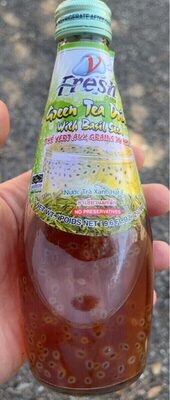 V FRESH
V Fresh, Green Tea Drink With Basil Seed
50kcal
0.7Protein
0Fat
11.7Carbs
TAZA
Pomegranate Drink With Basil Seeds
52kcal
0Protein
0Fat
12.7Carbs
TAZA
Honey Drink With Basil Seeds
48kcal
0Protein
0Fat
12Carbs
Global Garlic Inc.
Basil Seed Drink With Passion Fruit, Passion Fruit
High in added sugars — 80% DV per serving
59kcal
0Protein
0Fat
14.5Carbs
V FRESH
V Fresh, Green Tea Drink With Basil Seed
50kcal
0.7Protein
0Fat
11.7Carbs
TAZA
Pomegranate Drink With Basil Seeds
52kcal
0Protein
0Fat
12.7Carbs
TAZA
Honey Drink With Basil Seeds
48kcal
0Protein
0Fat
12Carbs
Global Garlic Inc.
Basil Seed Drink With Passion Fruit, Passion Fruit
High in added sugars — 80% DV per serving
59kcal
0Protein
0Fat
14.5Carbs
 U. S. Trading Company
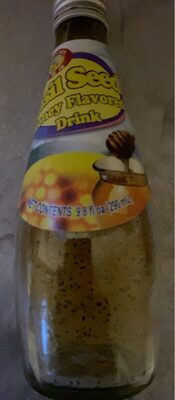
Honey Bee, Basil Seed Drink With Honey
38kcal
0Protein
0Fat
9.3Carbs
U. S. Trading Company
Honey Bee, Basil Seed Drink With Honey
38kcal
0Protein
0Fat
9.3Carbs