Blueberries Raspberries
Auto-generated content. This description was generated automatically and is pending editorial review. Inaccuracies are possible. Found a mistake? Contact us.
What it is
Blueberries and raspberries are popular berries native to North America and Europe. They grow on bushes and are harvested when ripe. These berries are commonly consumed fresh, frozen, or dried.
Why it's used
Blueberries and raspberries are often used to add natural flavor, color, and sweetness to foods. They are frequently found in dairy products like yogurt and ice cream, as well as in baked goods, cereals, and beverages.
Health notes
Berries are a source of vitamins, minerals, and antioxidants. The U.S. Food and Drug Administration (FDA) considers them safe for consumption. International bodies like the European Food Safety Authority (EFSA) have also evaluated berries and their components, generally recognizing their safety. While research suggests potential health benefits from antioxidants in berries, they are not regulated as drugs, and no specific health claims are approved for them in the U.S. food supply.
Allergen info
Blueberries and raspberries are not among the FDA's nine major allergens. They do not contain gluten.
Products containing Blueberries Raspberries
Compare products →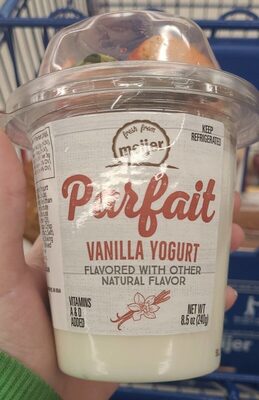 Meijer, Inc.
Vanilla Yogurt Parfait, Vanilla Yogurt
High in added sugars — 52% DV per serving
112kcal
2.9Protein
1.0Fat
24.2Carbs
Meijer, Inc.
Vanilla Yogurt Parfait, Vanilla Yogurt
High in added sugars — 52% DV per serving
112kcal
2.9Protein
1.0Fat
24.2Carbs
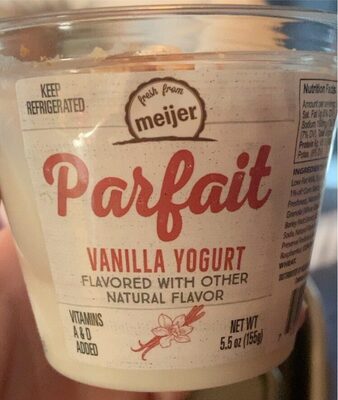 Meijer, Inc.
Vanilla Yogurt Parfait, Vanilla Yogurt
High in added sugars — 38% DV per serving
135kcal
3.9Protein
1.0Fat
29.0Carbs
Meijer, Inc.
Vanilla Yogurt Parfait, Vanilla Yogurt
High in added sugars — 38% DV per serving
135kcal
3.9Protein
1.0Fat
29.0Carbs
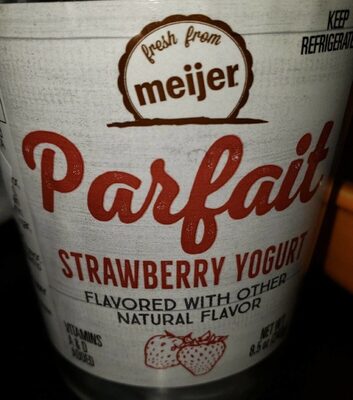 Meijer, Inc.
Strawberry Yogurt Parfait, Strawberry Yogurt
High in added sugars — 52% DV per serving
112kcal
2.9Protein
1.0Fat
24.2Carbs
Meijer, Inc.
Strawberry Yogurt Parfait, Strawberry Yogurt
High in added sugars — 30% DV per serving
116kcal
2.6Protein
1.0Fat
24.5Carbs
Meijer, Inc.
Strawberry Yogurt Parfait, Strawberry Yogurt
High in added sugars — 52% DV per serving
112kcal
2.9Protein
1.0Fat
24.2Carbs
Meijer, Inc.
Strawberry Yogurt Parfait, Strawberry Yogurt
High in added sugars — 30% DV per serving
116kcal
2.6Protein
1.0Fat
24.5Carbs