Cacao: 60% Minimum
What is Cacao: 60% Minimum?
Cacao is the dried and fermented seed of the Theobroma cacao tree, native to Central and South America. It is the source of cocoa solids and cocoa butter, the primary ingredients in chocolate. The percentage (e.g., 60%) indicates the minimum amount of cacao solids in the product.
Is Cacao: 60% Minimum vegan?
Cacao: 60% Minimum is not animal-derived. Products that contain it can still include other animal-derived ingredients, so check the full ingredient list.
Is Cacao: 60% Minimum gluten-free?
It does not contain gluten.
Is Cacao: 60% Minimum a major allergen?
Cacao is not one of the 9 FDA major allergens.
What is Cacao: 60% Minimum used for?
Cacao, in the form of cocoa powder or chocolate liquor, is primarily used to provide the characteristic flavor and color of chocolate products.
Is Cacao: 60% Minimum safe?
Cacao is generally recognized as safe (GRAS) by the FDA for use in food.
Why it's used
Cacao, in the form of cocoa powder or chocolate liquor, is primarily used to provide the characteristic flavor and color of chocolate products. It is also a source of antioxidants. It is found in a wide range of foods, including chocolate bars, baked goods, beverages, and desserts.
Health notes
Cacao is generally recognized as safe (GRAS) by the FDA for use in food. The FDA has not set specific upper intake limits for cacao consumption. Cacao is a source of flavanols, which are antioxidants that have been studied for potential cardiovascular benefits. However, the evidence is mixed, and more research is needed. JECFA and EFSA have evaluated cacao and cocoa products, but have not set specific numeric limits for general consumption.
Allergen info
Cacao is not one of the 9 FDA major allergens. It does not contain gluten.
Foods that contain Cacao: 60% Minimum
Compare products →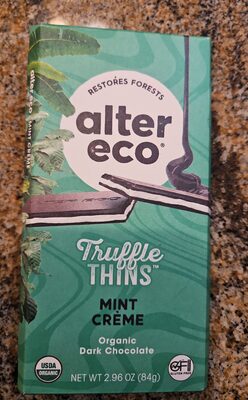 Alter Eco Americas Inc.
Mint Crme Organic Dark Chocolate, Mint Crme
High in saturated fat — 45% DV per serving
High in added sugars — 22% DV per serving
600kcal
3.3Protein
46.7Fat
46.7Carbs
Alter Eco Americas Inc.
Mint Crme Organic Dark Chocolate, Mint Crme
High in saturated fat — 45% DV per serving
High in added sugars — 22% DV per serving
600kcal
3.3Protein
46.7Fat
46.7Carbs
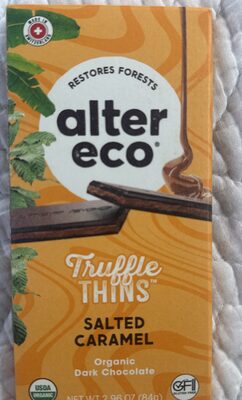 Alter Eco Americas Inc.
Salted Caramel Organic Dark Chocolate, Caramel
High in saturated fat — 45% DV per serving
High in added sugars — 22% DV per serving
600kcal
3.3Protein
46.7Fat
46.7Carbs
Alter Eco Americas Inc.
Salted Caramel Organic Dark Chocolate, Caramel
High in saturated fat — 45% DV per serving
High in added sugars — 22% DV per serving
600kcal
3.3Protein
46.7Fat
46.7Carbs
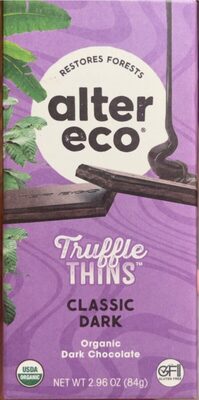 Alter Eco Americas Inc.
Classic Organic Dark Chocolate
High in saturated fat — 45% DV per serving
High in added sugars — 22% DV per serving
600kcal
3.3Protein
46.7Fat
46.7Carbs
Alter Eco Americas Inc.
Classic Organic Dark Chocolate
High in saturated fat — 45% DV per serving
High in added sugars — 22% DV per serving
600kcal
3.3Protein
46.7Fat
46.7Carbs
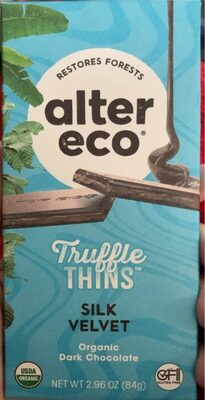 Alter Eco Americas Inc.
Silk Velvet Organic Dark Chocolate
High in saturated fat — 45% DV per serving
High in added sugars — 22% DV per serving
600kcal
6.7Protein
46.7Fat
46.7Carbs
Alter Eco Americas Inc.
Silk Velvet Organic Dark Chocolate
High in saturated fat — 45% DV per serving
High in added sugars — 22% DV per serving
600kcal
6.7Protein
46.7Fat
46.7Carbs
Auto-generated content. This description was generated automatically and is pending editorial review. Inaccuracies are possible. Found a mistake? Contact us.