Candy Eyes
Auto-generated content. This description was generated automatically and is pending editorial review. Inaccuracies are possible. Found a mistake? Contact us.
What it is
Candy eyes are small, edible decorations used to give baked goods and candies a "face." They are typically made from sugar, corn syrup, and food coloring, often with a binder like gum arabic or gelatin to hold them together. They are manufactured by pressing the mixture into small, eye-shaped molds.
Why it's used
Manufacturers add candy eyes for decorative purposes, enhancing the visual appeal of desserts. They are commonly found in baking mixes, cake and cupcake decorations, and ready-to-eat cakes and cupcakes. Their primary function is aesthetic, making treats look more fun and appealing, especially for children's parties.
Health notes
Candy eyes are generally recognized as safe (GRAS) by the FDA when used as intended. The main ingredients are sugar and corn syrup, which are common food components. Regulatory bodies like JECFA and EFSA have evaluated the safety of the individual components used in candy eyes. Concerns about high sugar intake are related to overall dietary patterns, not typically to the small amounts used in decorations.
Allergen info
Candy eyes are not typically derived from any of the nine major FDA allergens. However, some varieties may contain soy lecithin as an emulsifier, and gelatin, if used, is derived from animal collagen. Gluten is not an ingredient in standard candy eyes.
Products containing Candy Eyes
Compare products →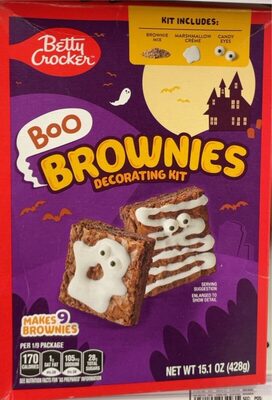 General Mills, Inc.
Brownies Decorating Kit - Browie Mix, Marshmallow Creme, Candy Eyes
High in added sugars — 56% DV per serving
354kcal
2.1Protein
3.1Fat
81.2Carbs
Target Stores
Crispy Rice Frankenstein Treats Kit, Crispy Rice
High in added sugars — 30% DV per serving
375kcal
3.1Protein
3.1Fat
84.4Carbs
Target Stores
Tie Dye Sugar Cookie The Walking Dyed Kit, Tie Dye Sugar Cookie
High in added sugars — 22% DV per serving
375kcal
4.2Protein
0Fat
87.5Carbs
Target Stores
Mummy Brownie Kit
High in added sugars — 42% DV per serving
382kcal
2.9Protein
5.9Fat
85.3Carbs
General Mills, Inc.
Chocolate Cookie Sandwiches Kit, Chocolate
High in added sugars — 26% DV per serving
346kcal
3.9Protein
3.9Fat
76.9Carbs
General Mills, Inc.
Brownies Decorating Kit - Browie Mix, Marshmallow Creme, Candy Eyes
High in added sugars — 56% DV per serving
354kcal
2.1Protein
3.1Fat
81.2Carbs
Target Stores
Crispy Rice Frankenstein Treats Kit, Crispy Rice
High in added sugars — 30% DV per serving
375kcal
3.1Protein
3.1Fat
84.4Carbs
Target Stores
Tie Dye Sugar Cookie The Walking Dyed Kit, Tie Dye Sugar Cookie
High in added sugars — 22% DV per serving
375kcal
4.2Protein
0Fat
87.5Carbs
Target Stores
Mummy Brownie Kit
High in added sugars — 42% DV per serving
382kcal
2.9Protein
5.9Fat
85.3Carbs
General Mills, Inc.
Chocolate Cookie Sandwiches Kit, Chocolate
High in added sugars — 26% DV per serving
346kcal
3.9Protein
3.9Fat
76.9Carbs