Caramel: Evaporated Milk
What is Caramel: Evaporated Milk?
Caramel color is a dark brown food coloring produced by heating sugars, often with acids, alkalis, or sulfites. It is used to give foods a rich, brown hue. There are four classes of caramel color, depending on the compounds used in the heating process.
Is Caramel: Evaporated Milk gluten-free?
It does not contain gluten.
Is Caramel: Evaporated Milk a major allergen?
Caramel color is not derived from any of the nine FDA major allergens.
What is Caramel: Evaporated Milk used for?
Caramel color is added to foods to provide a consistent brown color, mimicking the appearance of ingredients like chocolate or coffee.
Is Caramel: Evaporated Milk safe?
Caramel color is generally recognized as safe (GRAS) by the FDA for use in food.
Why it's used
Caramel color is added to foods to provide a consistent brown color, mimicking the appearance of ingredients like chocolate or coffee. It is commonly found in soft drinks, baked goods, sauces, and confectionery.
Health notes
Caramel color is generally recognized as safe (GRAS) by the FDA for use in food. Some classes of caramel color contain byproducts like 4-MEI, which has raised concerns. However, regulatory bodies like the FDA and EFSA have reviewed the available evidence and determined that current levels of exposure from food do not pose a health risk. JECFA has also evaluated caramel colors.
Allergen info
Caramel color is not derived from any of the nine FDA major allergens. It does not contain gluten.
Foods that contain Caramel: Evaporated Milk
Compare products →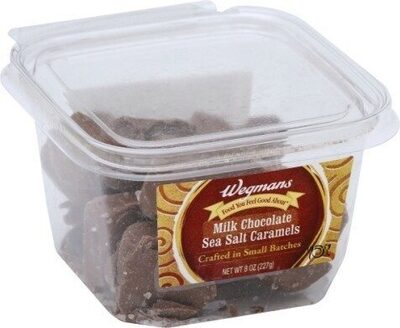 Wegmans Food Markets, Inc.
Wegmans, Milk Chocolate, Sea Salt Caramels, Sea Salt Caramels
High in saturated fat — 25% DV per serving
429kcal
4.8Protein
16.7Fat
66.7Carbs
Wegmans Food Markets, Inc.
Wegmans, Milk Chocolate, Sea Salt Caramels, Sea Salt Caramels
High in saturated fat — 25% DV per serving
429kcal
4.8Protein
16.7Fat
66.7Carbs
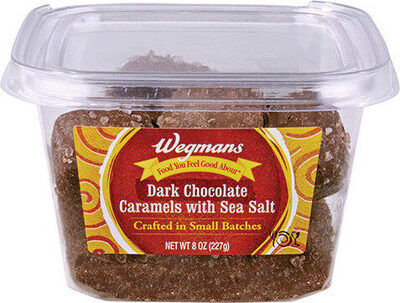 Wegmans Food Markets, Inc.
Wegmans, Dark Chocolate Caramels With Sea Salt
High in saturated fat — 25% DV per serving
429kcal
2.4Protein
21.4Fat
69.0Carbs
Nassau Candy Distributors, Inc.
Nancy Adams, Dark Chocolate Sea Salt Caramels, Sea Salt Caramels, Sea Salt Caramels
High in saturated fat — 22% DV per serving
395kcal
2.6Protein
18.4Fat
55.3Carbs
Wegmans Food Markets, Inc.
Dark Chocolate Sea Salt Caramels, Dark Chocolate
High in added sugars — 28% DV per serving
433kcal
3.3Protein
20Fat
70Carbs
Nassau Candy Distributors, Inc.
Dark Chocolate Sea Salt Caramel Pretzels, Dark Chocolate Sea Salt Caramel
High in saturated fat — 20% DV per serving
High in added sugars — 22% DV per serving
419kcal
3.2Protein
19.4Fat
58.1Carbs
Wegmans Food Markets, Inc.
Wegmans, Dark Chocolate Caramels With Sea Salt
High in saturated fat — 25% DV per serving
429kcal
2.4Protein
21.4Fat
69.0Carbs
Nassau Candy Distributors, Inc.
Nancy Adams, Dark Chocolate Sea Salt Caramels, Sea Salt Caramels, Sea Salt Caramels
High in saturated fat — 22% DV per serving
395kcal
2.6Protein
18.4Fat
55.3Carbs
Wegmans Food Markets, Inc.
Dark Chocolate Sea Salt Caramels, Dark Chocolate
High in added sugars — 28% DV per serving
433kcal
3.3Protein
20Fat
70Carbs
Nassau Candy Distributors, Inc.
Dark Chocolate Sea Salt Caramel Pretzels, Dark Chocolate Sea Salt Caramel
High in saturated fat — 20% DV per serving
High in added sugars — 22% DV per serving
419kcal
3.2Protein
19.4Fat
58.1Carbs
Learn more
Auto-generated content. This description was generated automatically and is pending editorial review. Inaccuracies are possible. Found a mistake? Contact us.