Colored With Black Carrot Powder
What is Colored With Black Carrot Powder?
Black carrot powder is a natural food coloring derived from the root of the black carrot plant. The deep purple color comes from anthocyanins, which are also found in other dark fruits and vegetables. The powder is typically made by drying and grinding the carrots.
Is Colored With Black Carrot Powder vegan?
Colored With Black Carrot Powder is not animal-derived. Products that contain it can still include other animal-derived ingredients, so check the full ingredient list.
Is Colored With Black Carrot Powder gluten-free?
Black carrot powder is derived from a vegetable and does not contain gluten.
Is Colored With Black Carrot Powder a major allergen?
Not a major allergen.
What is Colored With Black Carrot Powder used for?
Manufacturers use black carrot powder to provide a natural, vibrant purple or red color to foods.
Is Colored With Black Carrot Powder safe?
Black carrot powder is generally recognized as safe (GRAS) by the FDA for use as a food coloring.
Why it's used
Manufacturers use black carrot powder to provide a natural, vibrant purple or red color to foods. It is commonly found in candies, beverages, dairy products, and baked goods where a specific color hue is desired.
Health notes
Black carrot powder is generally recognized as safe (GRAS) by the FDA for use as a food coloring. The anthocyanins responsible for its color are antioxidants, which are compounds studied for their potential health benefits. Regulatory bodies like EFSA have evaluated anthocyanins and found them to be safe. No specific health concerns are associated with its use at typical dietary levels.
Allergen info
Not a major allergen. Black carrot powder is derived from a vegetable and does not contain gluten.
Foods that contain Colored With Black Carrot Powder
Compare products →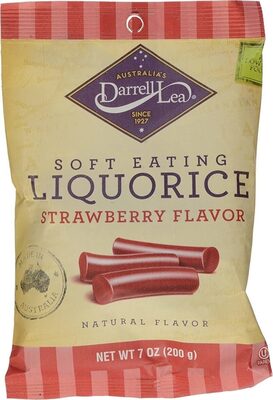 G.D. Roberts & Company Inc
Strawberry Flavored Soft Australian Liquorice, Strawberry
High in added sugars — 22% DV per serving
333kcal
3.3Protein
3.3Fat
76.7Carbs
G.D. Roberts & Company Inc
Strawberry Flavored Soft Australian Liquorice, Strawberry
High in added sugars — 22% DV per serving
333kcal
3.3Protein
3.3Fat
76.7Carbs
 G.D. Roberts & Company Inc
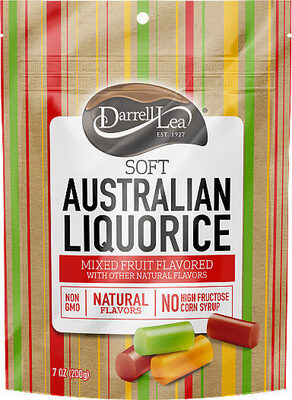
Soft Mixed Fruit Flavored Australian Licorice, Green Apple; Strawberry; Mango
High in added sugars — 22% DV per serving
333kcal
3.3Protein
3.3Fat
76.7Carbs
Balducci Enterprises Inc.
Strawberry Licorice
High in added sugars — 22% DV per serving
333kcal
3.3Protein
3.3Fat
76.7Carbs
Schnuck Markets, Inc.
Assorted Australian Licorice, Assorted
High in added sugars — 22% DV per serving
333kcal
3.3Protein
3.3Fat
76.7Carbs
G.D. Roberts & Company Inc
Soft Mixed Fruit Flavored Australian Licorice, Green Apple; Strawberry; Mango
High in added sugars — 22% DV per serving
333kcal
3.3Protein
3.3Fat
76.7Carbs
Balducci Enterprises Inc.
Strawberry Licorice
High in added sugars — 22% DV per serving
333kcal
3.3Protein
3.3Fat
76.7Carbs
Schnuck Markets, Inc.
Assorted Australian Licorice, Assorted
High in added sugars — 22% DV per serving
333kcal
3.3Protein
3.3Fat
76.7Carbs
Learn more
Auto-generated content. This description was generated automatically and is pending editorial review. Inaccuracies are possible. Found a mistake? Contact us.