Edible Stickers
Auto-generated content. This description was generated automatically and is pending editorial review. Inaccuracies are possible. Found a mistake? Contact us.
What it is
Edible stickers are thin, flexible sheets made from edible materials like starches, gums, or gelatin. They are designed to be safely eaten along with the food they decorate. These stickers are often printed with food-safe inks to create colorful designs.
Why it's used
Manufacturers use edible stickers to add visual appeal to foods, especially desserts and snacks. They are commonly found on gelatin, puddings, and other confectionery items. Their primary function is decorative, making products more attractive to consumers, particularly children.
Health notes
Edible stickers are generally considered safe for consumption when made with food-grade ingredients. The FDA has not specifically listed edible stickers as a regulated additive, but the components used to make them, such as starches and food colorings, are subject to FDA regulations. JECFA and EFSA have evaluated many common food ingredients used in edible stickers, such as starches and food colorings, and have established safety guidelines. At typical consumption levels, they are not associated with adverse health effects.
Allergen info
Edible stickers are not typically derived from major allergens, but it is important to check the specific ingredients. Some stickers may contain ingredients like wheat-derived starches or colorings that could be problematic for individuals with specific allergies. They are not a major allergen unless a specific ingredient is listed.
Products containing Edible Stickers
Compare products →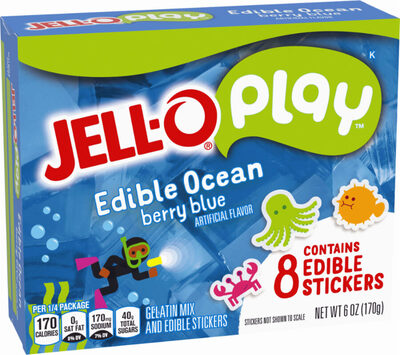 Kraft Heinz Foods Company
Berry Blue Gelatin Mix And Edible Ocean Stickers, Berry Blue
High in added sugars — 80% DV per serving
370kcal
6.5Protein
0Fat
89.1Carbs
Kraft Heinz Foods Company
Edible Grass Lime Gelatin Mix And Edible Stickers, Edible Grass Lime
High in added sugars — 80% DV per serving
370kcal
6.5Protein
0Fat
87.0Carbs
Kraft Heinz Foods Company
Edible Sand Vanilla Instant Pudding Mix And Edible Stickers, Edible Sand Vanilla
High in added sugars — 36% DV per serving
375kcal
0Protein
0Fat
95.8Carbs
Kraft Heinz Foods Company
Berry Blue Gelatin Mix And Edible Ocean Stickers, Berry Blue
High in added sugars — 80% DV per serving
370kcal
6.5Protein
0Fat
89.1Carbs
Kraft Heinz Foods Company
Edible Grass Lime Gelatin Mix And Edible Stickers, Edible Grass Lime
High in added sugars — 80% DV per serving
370kcal
6.5Protein
0Fat
87.0Carbs
Kraft Heinz Foods Company
Edible Sand Vanilla Instant Pudding Mix And Edible Stickers, Edible Sand Vanilla
High in added sugars — 36% DV per serving
375kcal
0Protein
0Fat
95.8Carbs