Japanese Horseradish
What is Japanese Horseradish?
Japanese horseradish, also known as wasabi, is a plant in the Brassicaceae family, native to Japan. The pungent rhizome (underground stem) is finely grated to create a paste, which is the part commonly used as a food ingredient.
Is Japanese Horseradish vegan?
Japanese Horseradish is not animal-derived. Products that contain it can still include other animal-derived ingredients, so check the full ingredient list.
Is Japanese Horseradish gluten-free?
It does not contain gluten.
Is Japanese Horseradish a major allergen?
Wasabi is not one of the 9 FDA major allergens.
What is Japanese Horseradish used for?
Wasabi is primarily used as a flavoring agent, providing a sharp, pungent heat that quickly dissipates.
Is Japanese Horseradish safe?
Wasabi is Generally Recognized As Safe (GRAS) by the FDA for use in food.
Why it's used
Wasabi is primarily used as a flavoring agent, providing a sharp, pungent heat that quickly dissipates. It is most famously paired with sushi and sashimi, but also appears in sauces, marinades, and snack seasonings.
Health notes
Wasabi is Generally Recognized As Safe (GRAS) by the FDA for use in food. Some research suggests compounds in wasabi may have antimicrobial and antioxidant properties. However, scientific evidence for these effects in humans at typical dietary intake levels is limited. JECFA has evaluated wasabi and established specifications for its use.
Allergen info
Wasabi is not one of the 9 FDA major allergens. It does not contain gluten.
Foods that contain Japanese Horseradish
Compare products →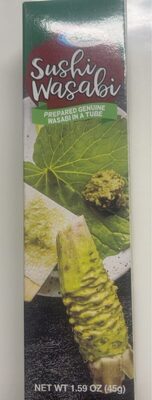 Advanced Fresh Concepts Corp.
Sushi Wasabi, Sushi
200kcal
0Protein
0Fat
40Carbs
Advanced Fresh Concepts Corp.
Sushi Wasabi, Sushi
200kcal
0Protein
0Fat
40Carbs
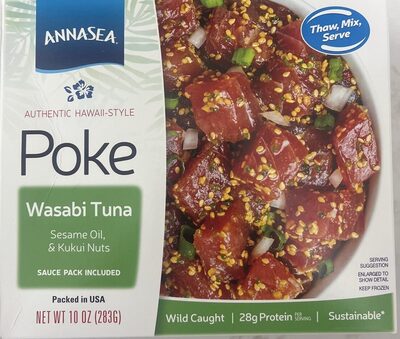 Western United Fish Co Frozen Division
Wasabi Ahi Wild Caught Ahi Tuna, Sesame Oil, Kukui Nuts, With Japanese Horseradish Authentic Hawaiian Poke Mix & Serve Meal Kit, Wasabi Ahi
High in sodium — 46% DV per serving
High in cholesterol — 23% DV per serving
154kcal
21.3Protein
6.6Fat
1.5Carbs
JFC International Inc.
Kimchi Furikake, Rice Seasoning
417kcal
0Protein
0Fat
66.7Carbs
Wismettac Asian Foods, Inc.
Premium Wasabi
300kcal
10Protein
10Fat
40Carbs
Sushi Avenue Inc.
Hawaiian Tuna Roll Tuna, Cucumber & Avocado With Sushi Sauce & Hawaiian Sauce, Hawaiian Tuna
146kcal
2.7Protein
3.8Fat
18.9Carbs
Western United Fish Co Frozen Division
Wasabi Ahi Wild Caught Ahi Tuna, Sesame Oil, Kukui Nuts, With Japanese Horseradish Authentic Hawaiian Poke Mix & Serve Meal Kit, Wasabi Ahi
High in sodium — 46% DV per serving
High in cholesterol — 23% DV per serving
154kcal
21.3Protein
6.6Fat
1.5Carbs
JFC International Inc.
Kimchi Furikake, Rice Seasoning
417kcal
0Protein
0Fat
66.7Carbs
Wismettac Asian Foods, Inc.
Premium Wasabi
300kcal
10Protein
10Fat
40Carbs
Sushi Avenue Inc.
Hawaiian Tuna Roll Tuna, Cucumber & Avocado With Sushi Sauce & Hawaiian Sauce, Hawaiian Tuna
146kcal
2.7Protein
3.8Fat
18.9Carbs
Learn more
Auto-generated content. This description was generated automatically and is pending editorial review. Inaccuracies are possible. Found a mistake? Contact us.