Lightly Smoked Herring Fillets
What is Lightly Smoked Herring Fillets?
Herring is a small, oily fish found in the North Atlantic and North Sea. Lightly smoked herring fillets are prepared by curing the fish, often with salt, and then exposing them to smoke for a short period. This process adds flavor and helps preserve the fish.
Is Lightly Smoked Herring Fillets vegan?
No. Lightly Smoked Herring Fillets is animal-derived, so it is not vegan.
Is Lightly Smoked Herring Fillets a major allergen?
Herring is a fish, which is one of the 9 major allergens recognized by the FDA.
What is Lightly Smoked Herring Fillets used for?
Smoked herring is typically eaten as a ready-to-eat product, often as a snack or part of a meal.
Is Lightly Smoked Herring Fillets safe?
Lightly smoked herring is a source of protein and omega-3 fatty acids.
Why it's used
Smoked herring is typically eaten as a ready-to-eat product, often as a snack or part of a meal. Manufacturers use it for its distinct smoky flavor and firm texture, commonly found in canned seafood and prepared meals like wraps.
Health notes
Lightly smoked herring is a source of protein and omega-3 fatty acids. The FDA considers smoked fish to be a potentially hazardous food due to the risk of botulism if not handled and stored properly. While not a major health concern at typical consumption levels, it's important to follow storage instructions. Regulatory bodies like the FDA do not set specific limits for consumption of smoked fish.
Allergen info
Herring is a fish, which is one of the 9 major allergens recognized by the FDA. Consumers with a fish allergy should avoid this ingredient.
Foods that contain Lightly Smoked Herring Fillets
Compare products →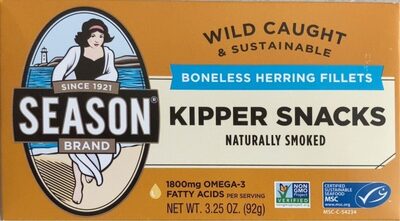 I. Epstein & Sons, Inc.
Naturally Smoked Boneless Herring Fillets
High in sodium — 20% DV per serving
228kcal
19.6Protein
16.3Fat
0Carbs
I. Epstein & Sons, Inc.
Naturally Smoked Kipper Snacks, Naturally Smoked
High in cholesterol — 20% DV per serving
207kcal
20.6Protein
14.1Fat
0Carbs
I. Epstein & Sons, Inc.
No Salt Added Naturally Smoked Boneless Herring Fillets Kipper Snacks
228kcal
19.6Protein
16.3Fat
0Carbs
I. Epstein & Sons, Inc.
Naturally Smoked Boneless Herring Fillets
High in sodium — 20% DV per serving
228kcal
19.6Protein
16.3Fat
0Carbs
I. Epstein & Sons, Inc.
Naturally Smoked Kipper Snacks, Naturally Smoked
High in cholesterol — 20% DV per serving
207kcal
20.6Protein
14.1Fat
0Carbs
I. Epstein & Sons, Inc.
No Salt Added Naturally Smoked Boneless Herring Fillets Kipper Snacks
228kcal
19.6Protein
16.3Fat
0Carbs
Auto-generated content. This description was generated automatically and is pending editorial review. Inaccuracies are possible. Found a mistake? Contact us.