Organic Mirin Salted
What is Organic Mirin Salted?
Mirin is a sweet rice wine used in Japanese cooking. It is made by fermenting glutinous rice, rice koji (a mold), and sometimes sake or shochu. Salt is added to mirin to prevent it from fermenting further and to enhance its flavor.
Is Organic Mirin Salted vegan?
Organic Mirin Salted is not animal-derived. Products that contain it can still include other animal-derived ingredients, so check the full ingredient list.
Is Organic Mirin Salted gluten-free?
It does not contain gluten.
Is Organic Mirin Salted a major allergen?
Mirin is derived from rice, which is not one of the nine major allergens.
What is Organic Mirin Salted used for?
Manufacturers add salted mirin to provide a sweet, savory, and umami flavor to foods.
Is Organic Mirin Salted safe?
Salted mirin is generally recognized as safe (GRAS) by the FDA when used as a food ingredient.
Why it's used
Manufacturers add salted mirin to provide a sweet, savory, and umami flavor to foods. It is commonly used in sauces, marinades, glazes, and dressings, particularly in Japanese and Asian-inspired dishes, to add depth and a subtle sweetness.
Health notes
Salted mirin is generally recognized as safe (GRAS) by the FDA when used as a food ingredient. It contains alcohol and sodium, which are present in typical food amounts. JECFA has evaluated mirin and found it to be safe for consumption. No significant health concerns are associated with the typical consumption of mirin as part of a balanced diet.
Allergen info
Mirin is derived from rice, which is not one of the nine major allergens. It does not contain gluten. Not a major allergen.
Foods that contain Organic Mirin Salted
Compare products →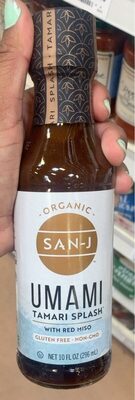 San-J International, Inc.
Umami Organic Tamari Splash With Red Miso, Umami
233kcal
6.7Protein
0Fat
46.7Carbs
San-J International, Inc.
Citrus Tamari Splash Ponzu With Yuzu, Citrus
100kcal
6.7Protein
0Fat
13.3Carbs
San-J International, Inc.
Sweet Organic Tamari Splash With Maple Syrup, Sweet
200kcal
6.7Protein
0Fat
40Carbs
San-J International, Inc.
Umami Organic Tamari Splash With Red Miso, Umami
233kcal
6.7Protein
0Fat
46.7Carbs
San-J International, Inc.
Citrus Tamari Splash Ponzu With Yuzu, Citrus
100kcal
6.7Protein
0Fat
13.3Carbs
San-J International, Inc.
Sweet Organic Tamari Splash With Maple Syrup, Sweet
200kcal
6.7Protein
0Fat
40Carbs
Learn more
Auto-generated content. This description was generated automatically and is pending editorial review. Inaccuracies are possible. Found a mistake? Contact us.