Plum Vinegar
Auto-generated content. This description was generated automatically and is pending editorial review. Inaccuracies are possible. Found a mistake? Contact us.
What it is
Plum vinegar, also known as umezu, is a traditional Japanese condiment made from the brine of pickled plums (ume). The plums are typically pickled with salt and shiso leaves, and the resulting liquid is strained to create the vinegar.
Why it's used
Plum vinegar is used to add a unique sweet, sour, and salty flavor to dishes. It can be used in salad dressings, marinades, dipping sauces, and as a seasoning for rice or vegetables. Manufacturers use it primarily as a flavor enhancer and acidity regulator.
Health notes
Plum vinegar is generally recognized as safe (GRAS) by the FDA for use in food. It is a traditional food ingredient with a long history of use in Japan. While some traditional health claims are associated with umeboshi and its byproducts, these are not evaluated by major regulatory bodies like the FDA or EFSA. JECFA has evaluated similar fermented products. Evidence regarding specific health benefits or risks at typical consumption levels is limited.
Allergen info
Plum vinegar is not derived from any of the nine FDA major allergens. It does not contain gluten.
Products containing Plum Vinegar
Compare products →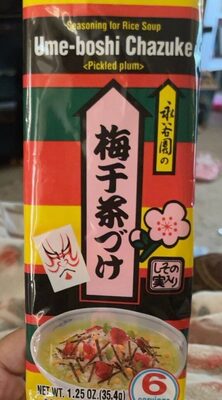 NAGATANIEN
Nagatanien, Ume-Boshi Chazuke Seasoning For Rice Soup
182kcal
18.2Protein
0Fat
36.4Carbs
MORISHOU
Plum Vinegar With Perilla Juice
18kcal
1Protein
0Fat
1Carbs
S & B Shokuhin Company Ltd
S&B, Spaghetti Sauce, Japanese Plum, Japanese Plum
High in sodium — 54% DV per serving
167kcal
3.7Protein
11.1Fat
14.8Carbs
Nissin Foods USA Co Inc
Seafood Ramen Noodle Soup, Seafood
High in sodium — 63% DV per serving
High in saturated fat — 30% DV per serving
447kcal
11.8Protein
17.1Fat
60.5Carbs
Nissin Foods USA Co Inc
Sizzlin' Rich Pork Hot & Spicy Fire Wok, Sizzlin' Rich Pork
High in sodium — 44% DV per serving
High in saturated fat — 25% DV per serving
452kcal
11.3Protein
21.0Fat
56.5Carbs
NAGATANIEN
Nagatanien, Ume-Boshi Chazuke Seasoning For Rice Soup
182kcal
18.2Protein
0Fat
36.4Carbs
MORISHOU
Plum Vinegar With Perilla Juice
18kcal
1Protein
0Fat
1Carbs
S & B Shokuhin Company Ltd
S&B, Spaghetti Sauce, Japanese Plum, Japanese Plum
High in sodium — 54% DV per serving
167kcal
3.7Protein
11.1Fat
14.8Carbs
Nissin Foods USA Co Inc
Seafood Ramen Noodle Soup, Seafood
High in sodium — 63% DV per serving
High in saturated fat — 30% DV per serving
447kcal
11.8Protein
17.1Fat
60.5Carbs
Nissin Foods USA Co Inc
Sizzlin' Rich Pork Hot & Spicy Fire Wok, Sizzlin' Rich Pork
High in sodium — 44% DV per serving
High in saturated fat — 25% DV per serving
452kcal
11.3Protein
21.0Fat
56.5Carbs