Red #3 And Blue #1 Lake
What is Red #3 And Blue #1 Lake?
Red #3 Lake and Blue #1 Lake are synthetic color additives. A 'lake' color means the dye is mixed with an inert material, usually aluminum hydroxide, to create an insoluble pigment. This form makes the color more stable and suitable for products with little moisture or fat.
Is Red #3 And Blue #1 Lake vegan?
Red #3 And Blue #1 Lake is not animal-derived. Products that contain it can still include other animal-derived ingredients, so check the full ingredient list.
Is Red #3 And Blue #1 Lake a major allergen?
Not a major allergen.
What is Red #3 And Blue #1 Lake used for?
These ingredients are used to add color to foods and beverages.
Is Red #3 And Blue #1 Lake safe?
Red #3 (Erythrosine) was revoked by the FDA for use in food in January 2025, with manufacturers having until January 2027 to comply.
Why it's used
These ingredients are used to add color to foods and beverages. They provide vibrant red and blue hues and are often found in candies, baked goods, frostings, and other processed foods.
Health notes
Red #3 (Erythrosine) was revoked by the FDA for use in food in January 2025, with manufacturers having until January 2027 to comply. This revocation was due to findings of cancer in male rats, under a specific law (the Delaney Clause), though the FDA stated this is not relevant to human risk. California's Food Safety Act (AB 418) also bans Red #3 in food from 2027. Blue #1 (Brilliant Blue FCF) is part of a plan announced by the FDA in April 2025 to phase out petroleum-based synthetic dyes. Both Red #3 and Blue #1 have been evaluated by JECFA and EFSA, which have set acceptable daily intakes. Some studies have suggested a link between synthetic food colors and hyperactivity in some children, but evidence is mixed.
Allergen info
Not a major allergen.
Foods that contain Red #3 And Blue #1 Lake
Compare products →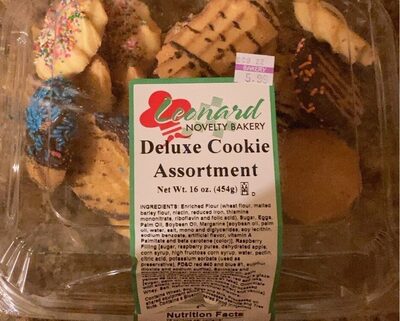 Leonard Novelty Bakery
Deluxe Cookie Assortment, Deluxe
429kcal
3.6Protein
21.4Fat
57.1Carbs
KCCP Distribution Co LLC
Autumn Assortment
464kcal
3.6Protein
25Fat
57.1Carbs
Leonard Novelty Bakery
Fancy Assortment
464kcal
7.1Protein
25Fat
53.6Carbs
Leonard Novelty Bakery
Rainbow Sprinkle Jelly Cookies, Rainbow Sprinkle Jelly
471kcal
5.9Protein
26.5Fat
52.9Carbs
Leonard Novelty Bakery
Coconut Dipped
464kcal
7.1Protein
25Fat
53.6Carbs
Leonard Novelty Bakery
Autumn Selection, Autumn
464kcal
3.6Protein
21.4Fat
57.1Carbs
Leonard Novelty Bakery
Deluxe Cookie Assortment, Deluxe Cookie
429kcal
3.6Protein
21.4Fat
57.1Carbs
Leonard Novelty Bakery
Kid's Favorites Cookies
429kcal
3.6Protein
21.4Fat
57.1Carbs
Leonard Novelty Bakery
Deluxe Cookie Assortment, Deluxe
429kcal
3.6Protein
21.4Fat
57.1Carbs
KCCP Distribution Co LLC
Autumn Assortment
464kcal
3.6Protein
25Fat
57.1Carbs
Leonard Novelty Bakery
Fancy Assortment
464kcal
7.1Protein
25Fat
53.6Carbs
Leonard Novelty Bakery
Rainbow Sprinkle Jelly Cookies, Rainbow Sprinkle Jelly
471kcal
5.9Protein
26.5Fat
52.9Carbs
Leonard Novelty Bakery
Coconut Dipped
464kcal
7.1Protein
25Fat
53.6Carbs
Leonard Novelty Bakery
Autumn Selection, Autumn
464kcal
3.6Protein
21.4Fat
57.1Carbs
Leonard Novelty Bakery
Deluxe Cookie Assortment, Deluxe Cookie
429kcal
3.6Protein
21.4Fat
57.1Carbs
Leonard Novelty Bakery
Kid's Favorites Cookies
429kcal
3.6Protein
21.4Fat
57.1Carbs
Learn more
Auto-generated content. This description was generated automatically and is pending editorial review. Inaccuracies are possible. Found a mistake? Contact us.