Salted Butter Caramel
What is Salted Butter Caramel?
Salted butter caramel is a sweet, thick sauce or confection made by heating sugar until it caramelizes, then incorporating butter and salt. The butter adds richness and a creamy texture, while the salt balances the sweetness.
Is Salted Butter Caramel vegan?
No. Salted Butter Caramel is animal-derived, so it is not vegan.
Is Salted Butter Caramel a major allergen?
It contains milk, which is one of the nine major food allergens identified by the FDA.
What is Salted Butter Caramel used for?
Manufacturers use salted butter caramel primarily as a flavor enhancer and sweetener in various dessert products.
Is Salted Butter Caramel safe?
Salted butter caramel is a traditional food ingredient generally recognized as safe when consumed as part of a balanced diet.
Why it's used
Manufacturers use salted butter caramel primarily as a flavor enhancer and sweetener in various dessert products. It provides a distinctive sweet and savory taste, commonly found in baked goods, confections, and ice creams.
Health notes
Salted butter caramel is a traditional food ingredient generally recognized as safe when consumed as part of a balanced diet. As a source of added sugars, saturated fat, and sodium, excessive consumption should be limited to align with dietary guidelines. The 2025-2030 Dietary Guidelines for Americans recommend no amount of added sugars, and keeping saturated fat intake below 10% of daily calories. The FDA Daily Value for sodium is 2,300 mg. This composite food ingredient is not typically evaluated as a single additive by bodies like JECFA or EFSA.
Allergen info
It contains milk, which is one of the nine major food allergens identified by the FDA.
Foods that contain Salted Butter Caramel
Compare products →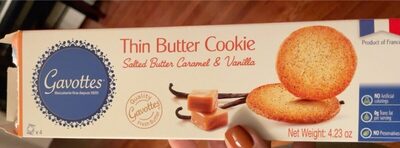 Chase Charts
Thin Cookie, Salted Butter Caramel & Vanilla
High in saturated fat — 25% DV per serving
500kcal
6.7Protein
26.7Fat
63.3Carbs
Ahold USA, Inc.
Lava Cake, Salted Butter Caramel
High in cholesterol — 28% DV per serving
402kcal
5.4Protein
21.7Fat
47.8Carbs
Dutch Heritage Gardens
Lava Cake, Salted Butter Caramel
High in cholesterol — 23% DV per serving
403kcal
5.1Protein
21.1Fat
47.9Carbs
Reel E Good Products, Inc.
French Biscuits, Caramel
High in saturated fat — 45% DV per serving
496kcal
6.4Protein
22.4Fat
68.8Carbs
Chase Charts
Thin Cookie, Salted Butter Caramel & Vanilla
High in saturated fat — 25% DV per serving
500kcal
6.7Protein
26.7Fat
63.3Carbs
Ahold USA, Inc.
Lava Cake, Salted Butter Caramel
High in cholesterol — 28% DV per serving
402kcal
5.4Protein
21.7Fat
47.8Carbs
Dutch Heritage Gardens
Lava Cake, Salted Butter Caramel
High in cholesterol — 23% DV per serving
403kcal
5.1Protein
21.1Fat
47.9Carbs
Reel E Good Products, Inc.
French Biscuits, Caramel
High in saturated fat — 45% DV per serving
496kcal
6.4Protein
22.4Fat
68.8Carbs
Learn more
Auto-generated content. This description was generated automatically and is pending editorial review. Inaccuracies are possible. Found a mistake? Contact us.