Toffee 10
What is Toffee 10?
Toffee is a sweet, chewy or brittle confection made by cooking sugar or molasses with butter, and sometimes flour, until it caramelizes. The mixture is then cooled and hardened. It is known for its rich, buttery taste and often crunchy texture.
Is Toffee 10 vegan?
No. Toffee 10 is animal-derived, so it is not vegan.
Is Toffee 10 a major allergen?
Toffee is typically made with butter, which is derived from milk, one of the nine major FDA allergens.
What is Toffee 10 used for?
Manufacturers add toffee to products primarily for its distinct sweet, buttery flavor and crunchy texture.
Is Toffee 10 safe?
Toffee is a food product, not a food additive, and therefore does not have a specific regulatory status like GRAS or an approved additive from the FDA.
Why it's used
Manufacturers add toffee to products primarily for its distinct sweet, buttery flavor and crunchy texture. It is a popular inclusion in chocolate bars, ice cream, cookies, and other desserts, providing a pleasant contrast in texture and a rich taste.
Health notes
Toffee is a food product, not a food additive, and therefore does not have a specific regulatory status like GRAS or an approved additive from the FDA. Its primary components are sugar and fat, which contribute to the overall calorie, added sugar, and saturated fat content of foods. The 2025-2030 Dietary Guidelines for Americans recommend no amount of added sugars, and at most 10 grams of added sugars per meal, and keeping saturated fat intake to less than 10% of daily calories. Toffee itself has not been evaluated by JECFA or EFSA as a food additive.
Allergen info
Toffee is typically made with butter, which is derived from milk, one of the nine major FDA allergens. Some recipes may also include wheat flour, another major allergen.
Foods that contain Toffee 10
Compare products →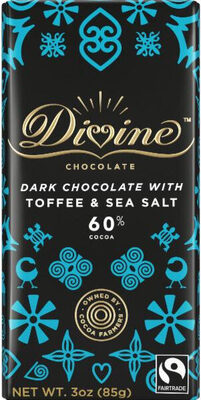 Divine Chocolate, Inc.
Dark Chocolate With Toffee & Sea Salt, 60% Cocoa, Toffee & Sea Salt
High in saturated fat — 40% DV per serving
518kcal
7.1Protein
32.9Fat
61.2Carbs
Divine Chocolate, Inc.
Dark Chocolate With Toffee & Sea Salt
High in saturated fat — 40% DV per serving
524kcal
7.1Protein
30.9Fat
59.5Carbs
Divine Chocolate, Inc.
Milk Chocolate, Toffee & Sea Salt
High in saturated fat — 45% DV per serving
571kcal
4.8Protein
35.7Fat
57.1Carbs
Divine Chocolate, Inc.
Dark Chocolate With Toffee & Sea Salt, 60% Cocoa, Toffee & Sea Salt
High in saturated fat — 40% DV per serving
518kcal
7.1Protein
32.9Fat
61.2Carbs
Divine Chocolate, Inc.
Dark Chocolate With Toffee & Sea Salt
High in saturated fat — 40% DV per serving
524kcal
7.1Protein
30.9Fat
59.5Carbs
Divine Chocolate, Inc.
Milk Chocolate, Toffee & Sea Salt
High in saturated fat — 45% DV per serving
571kcal
4.8Protein
35.7Fat
57.1Carbs
Learn more
Auto-generated content. This description was generated automatically and is pending editorial review. Inaccuracies are possible. Found a mistake? Contact us.