Wild Mushrooms
What is Wild Mushrooms?
Wild mushrooms are the fruiting bodies of fungi that grow naturally in forests and other natural environments. They are harvested by foragers and can also be cultivated. Varieties include shiitake, oyster, porcini, and morels, each with a distinct flavor and texture.
Is Wild Mushrooms vegan?
Wild Mushrooms is not animal-derived. Products that contain it can still include other animal-derived ingredients, so check the full ingredient list.
Is Wild Mushrooms gluten-free?
Gluten is not present.
Is Wild Mushrooms a major allergen?
Not a major allergen.
What is Wild Mushrooms used for?
Wild mushrooms are used to add a rich, earthy, and savory flavor to a variety of dishes.
Is Wild Mushrooms safe?
Wild mushrooms are generally considered safe for consumption and are a source of vitamins, minerals, and fiber.
Why it's used
Wild mushrooms are used to add a rich, earthy, and savory flavor to a variety of dishes. They are often found in pasta sauces, soups, stews, rice dishes, and as a topping for pizzas and meats. Their unique taste makes them a popular ingredient for adding depth and complexity to recipes.
Health notes
Wild mushrooms are generally considered safe for consumption and are a source of vitamins, minerals, and fiber. Some individuals may experience digestive upset from certain types of wild mushrooms if not properly prepared. It is crucial to only consume mushrooms identified as safe for eating, as many wild varieties are poisonous. Regulatory bodies like the FDA do not typically evaluate whole, unprocessed wild mushrooms as food additives.
Allergen info
Not a major allergen. Mushrooms are fungi, not plants or animals that typically cause allergies. Gluten is not present.
Foods that contain Wild Mushrooms
Compare products →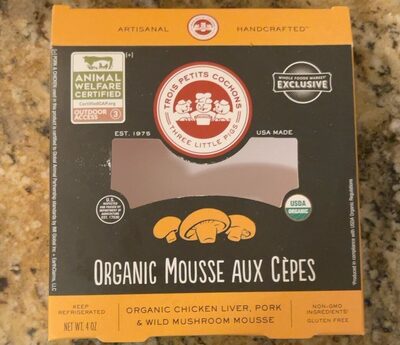 3 Little Pigs LLC
Organic Chicken Liver, Pork & Wild Mushroom Mousse
High in saturated fat — 25% DV per serving
High in cholesterol — 30% DV per serving
304kcal
10.7Protein
26.8Fat
3.6Carbs
3 Little Pigs LLC
Trois Petits Cochons, Turkey Sausage With Wild Mushrooms & Cognac
High in sodium — 22% DV per serving
High in cholesterol — 20% DV per serving
165kcal
17.6Protein
8.2Fat
1.2Carbs
Giant Eagle, Inc.
Wild Mushroom Authentic Italian Arborio Rice With Seasoned Mushrooms Risotto, Wild Mushroom
High in sodium — 40% DV per serving
360kcal
12.8Protein
5.2Fat
64.0Carbs
3 Little Pigs LLC
Organic Chicken Liver, Pork & Wild Mushroom Mousse
High in saturated fat — 25% DV per serving
High in cholesterol — 30% DV per serving
304kcal
10.7Protein
26.8Fat
3.6Carbs
3 Little Pigs LLC
Trois Petits Cochons, Turkey Sausage With Wild Mushrooms & Cognac
High in sodium — 22% DV per serving
High in cholesterol — 20% DV per serving
165kcal
17.6Protein
8.2Fat
1.2Carbs
Giant Eagle, Inc.
Wild Mushroom Authentic Italian Arborio Rice With Seasoned Mushrooms Risotto, Wild Mushroom
High in sodium — 40% DV per serving
360kcal
12.8Protein
5.2Fat
64.0Carbs
Auto-generated content. This description was generated automatically and is pending editorial review. Inaccuracies are possible. Found a mistake? Contact us.