Balinese Sea Salt
Auto-generated content. This description was generated automatically and is pending editorial review. Inaccuracies are possible. Found a mistake? Contact us.
What it is
Balinese sea salt is a type of sea salt harvested from the waters surrounding the island of Bali, Indonesia. It is typically produced using traditional methods, where seawater is evaporated, leaving behind mineral-rich salt crystals. The specific mineral content can vary depending on the location and evaporation process, contributing to its unique flavor profile.
Why it's used
Manufacturers use Balinese sea salt primarily as a flavoring agent to enhance the taste of foods. Its distinct mineral composition and texture make it a popular choice for finishing dishes, adding a nuanced saltiness. It is commonly found in seasoning mixes, marinades, sauces, and as a direct salt substitute in various savory products.
Health notes
Salt, in general, is essential for human health, but excessive intake is linked to high blood pressure. The FDA considers salt (sodium chloride) to be Generally Recognized As Safe (GRAS) when used as intended. International bodies like JECFA and EFSA have evaluated sodium chloride and established guidelines for its consumption. While Balinese sea salt is chemically similar to regular table salt, its mineral content may offer trace amounts of other elements, though the health impact of these at typical consumption levels is not well-established.
Allergen info
Sea salt is not derived from any of the 9 FDA major allergens. It does not contain gluten.
Products containing Balinese Sea Salt
Compare products →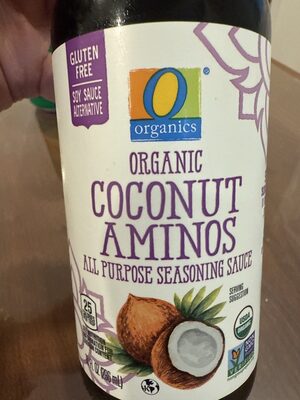 Glencourt Inc.
Coconut Aminos Organic All Purpose Seasoning Sauce, Coconut Aminos
167kcal
0Protein
0Fat
40Carbs
Glencourt Inc.
Coconut Aminos Organic All Purpose Seasoning Sauce, Coconut Aminos
167kcal
0Protein
0Fat
40Carbs
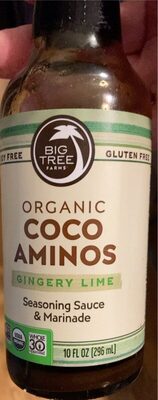 Jordan Eyewear, Inc.
Gingery Lime Organic Coco Aminos Seasoning Sauce & Marinade, Gingery Lime
High in sodium — 20% DV per serving
167kcal
0Protein
0Fat
46.7Carbs
Jordan Eyewear, Inc.
Gingery Lime Organic Coco Aminos Seasoning Sauce & Marinade, Gingery Lime
High in sodium — 20% DV per serving
167kcal
0Protein
0Fat
46.7Carbs
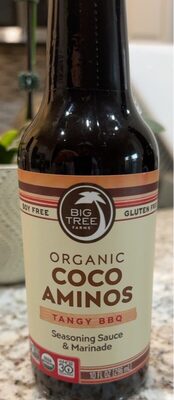 Jordan Eyewear, Inc.
Tangy BBQ Seasoning Sauce & Marinade Coco Aminos, Tangy BBQ
High in sodium — 20% DV per serving
167kcal
0Protein
0Fat
46.7Carbs
Jordan Eyewear, Inc.
Tangy BBQ Seasoning Sauce & Marinade Coco Aminos, Tangy BBQ
High in sodium — 20% DV per serving
167kcal
0Protein
0Fat
46.7Carbs
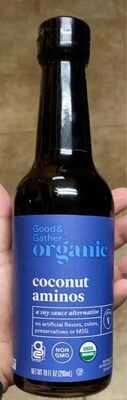 Target Stores
Coconut Aminos Soy Sauce Alternative, Coconut
High in sodium — 22% DV per serving
194kcal
0Protein
0Fat
44.4Carbs
Target Stores
Coconut Aminos Soy Sauce Alternative, Coconut
High in sodium — 22% DV per serving
194kcal
0Protein
0Fat
44.4Carbs
 Jordan Eyewear, Inc.
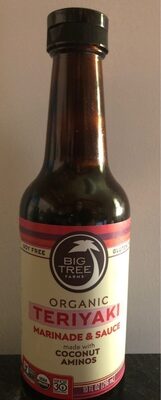
Teriyaki Organic Marinade & Sauce, Teriyaki
High in sodium — 20% DV per serving
200kcal
0Protein
0Fat
46.7Carbs
Jordan Eyewear, Inc.
Teriyaki Organic Marinade & Sauce, Teriyaki
High in sodium — 20% DV per serving
200kcal
0Protein
0Fat
46.7Carbs