Black Garlic
Auto-generated content. This description was generated automatically and is pending editorial review. Inaccuracies are possible. Found a mistake? Contact us.
What it is
Black garlic is regular garlic (Allium sativum) that has been aged under controlled heat and humidity for weeks or months. This process, sometimes called the Maillard reaction, turns the cloves black, softens their texture, and creates a sweet, balsamic-like flavor with hints of tamarind and molasses.
Why it's used
Manufacturers use black garlic primarily as a flavoring ingredient. Its unique sweet and savory taste adds depth to a variety of foods, including sauces, marinades, dips, seasonings, and even some baked goods. It provides a complex umami note without the sharp bite of raw garlic.
Health notes
Black garlic is generally recognized as safe (GRAS) by the FDA for use as a flavoring. It is not a regulated additive. Research suggests that the aging process may increase the concentration of certain beneficial compounds, like S-allyl-cysteine (SAC), which is more stable and bioavailable than compounds in raw garlic. However, more peer-reviewed research is needed to confirm specific health benefits at typical consumption levels. JECFA has evaluated garlic extract, but not specifically black garlic.
Allergen info
Garlic is not one of the 9 FDA major allergens. It does not contain gluten.
Products containing Black Garlic
Compare products →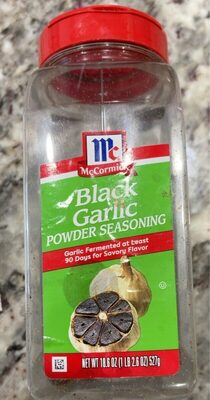 McCormick & Company, Inc.
Black Garlic Powder Seasoning, Black Garlic
0kcal
0Protein
0Fat
0Carbs
McCormick & Company, Inc.
Black Garlic Salt, Black Garlic
0kcal
0Protein
0Fat
0Carbs
McCormick & Company, Inc.
Black Garlic Powder Seasoning, Black Garlic
0kcal
0Protein
0Fat
0Carbs
McCormick & Company, Inc.
Black Garlic Salt, Black Garlic
0kcal
0Protein
0Fat
0Carbs
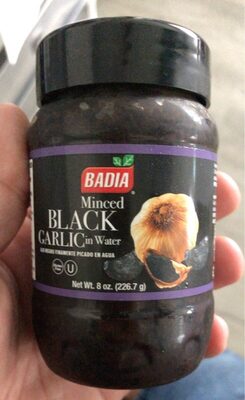 Badia Spices Inc.
Minced Black Garlic In Water
0kcal
0Protein
0Fat
20Carbs
Badia Spices Inc.
Minced Black Garlic In Water
0kcal
0Protein
0Fat
20Carbs