Fd%c Blue # 1 And Titanium Dioxide
Auto-generated content. This description was generated automatically and is pending editorial review. Inaccuracies are possible. Found a mistake? Contact us.
What it is
FD&C Blue #1 is a synthetic food dye, chemically manufactured to produce a bright blue color. Titanium dioxide is a naturally occurring white mineral, processed from titanium ore.
Why it's used
These ingredients are used together to create specific color effects in foods, often to achieve a bright blue or to lighten and opacify a blue shade. They are commonly found in candies, chewing gum, and some baked goods.
Health notes
FD&C Blue #1 is an FDA-approved color additive. In April 2025, the FDA announced a plan to phase out petroleum-based synthetic dyes, which includes FD&C Blue #1. JECFA has evaluated FD&C Blue #1 and set an acceptable daily intake. Some studies have suggested a link between synthetic food dyes and hyperactivity in children, but evidence is mixed. Titanium dioxide is also an FDA-approved color additive and remains permitted by the FDA. JECFA has evaluated titanium dioxide and set an acceptable daily intake. However, the European Food Safety Authority (EFSA) concluded in 2021 that titanium dioxide could no longer be considered safe as a food additive due to genotoxicity concerns, leading to its ban in the EU in 2022. The FDA continues to consider titanium dioxide safe for use under current conditions.
Allergen info
Neither FD&C Blue #1 nor titanium dioxide is a major allergen.
Products containing Fd%c Blue # 1 And Titanium Dioxide
Compare products →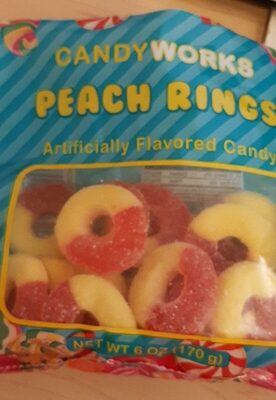 Heritage Candy Company, Inc.
Peach Rings Flavored Candy, Peach Rings
High in added sugars — 54% DV per serving
350kcal
7.5Protein
0Fat
82.5Carbs
Heritage Candy Company, Inc.
Peach Rings Flavored Candy, Peach Rings
High in added sugars — 54% DV per serving
350kcal
7.5Protein
0Fat
82.5Carbs
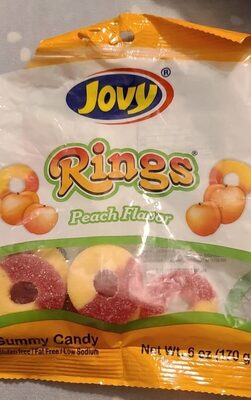 Mexi-Land Inc.
Peach Flavor Rings Gummy Candy, Peach
High in added sugars — 54% DV per serving
350kcal
7.5Protein
0Fat
82.5Carbs
El Charro, Inc.
Round Lollipop
High in added sugars — 138% DV per serving
393kcal
0Protein
0Fat
98.6Carbs
Mexi-Land Inc.
Peach Flavor Rings Gummy Candy, Peach
High in added sugars — 54% DV per serving
350kcal
7.5Protein
0Fat
82.5Carbs
El Charro, Inc.
Round Lollipop
High in added sugars — 138% DV per serving
393kcal
0Protein
0Fat
98.6Carbs