Honey Dijon Dressing
What is Honey Dijon Dressing?
Honey Dijon dressing is a sweet and tangy condiment made primarily from honey, Dijon mustard, and an acidic ingredient like vinegar or lemon juice. It often includes oil, spices, and other flavorings. The ingredients are typically whisked or blended together to create a smooth, emulsified sauce.
Is Honey Dijon Dressing vegan?
No. Honey Dijon Dressing is animal-derived, so it is not vegan.
Is Honey Dijon Dressing a major allergen?
Mustard is one of the 9 FDA major allergens.
What is Honey Dijon Dressing used for?
Manufacturers use honey Dijon dressing to add a sweet, savory, and slightly spicy flavor to foods.
Is Honey Dijon Dressing safe?
Honey Dijon dressing is generally recognized as safe by the FDA when used as a food ingredient.
Why it's used
Manufacturers use honey Dijon dressing to add a sweet, savory, and slightly spicy flavor to foods. It acts as a dressing for salads, a marinade for meats, or a dipping sauce for appetizers. Its emulsified nature helps bind ingredients together in dishes like deli salads.
Health notes
Honey Dijon dressing is generally recognized as safe by the FDA when used as a food ingredient. The primary components, honey and mustard, are common food items with long histories of use. While honey contains natural sugars, and mustard can be a source of sodium depending on the preparation, typical consumption within a balanced diet is not associated with adverse health effects. Regulatory bodies like JECFA have evaluated individual components of such dressings.
Allergen info
Mustard is one of the 9 FDA major allergens. Depending on the specific recipe, other allergens like soy (from soy sauce or oil) or wheat (as a binder or flavoring) could be present.
Foods that contain Honey Dijon Dressing
Compare products →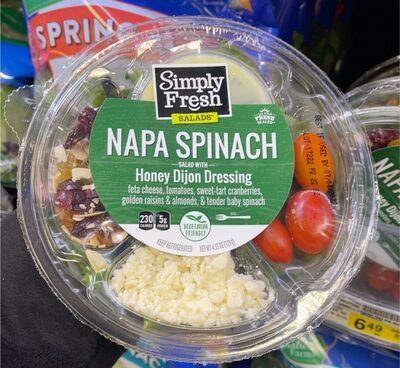 Uniq Vending, LLC.
Napa Spinach Salad With Honey Dijon Dressing, Napa Spinach
High in sodium — 21% DV per serving
178kcal
3.9Protein
10.8Fat
17.1Carbs
Renaissance Food Group, LLC
Power Salad With Kale, Kale
High in sodium — 22% DV per serving
High in added sugars — 38% DV per serving
161kcal
3.2Protein
7.7Fat
21.8Carbs
Eaux de Vie, Inc.
Napa With Honey Dijon Dressing Salads, Napa Honey Dijon
High in sodium — 23% DV per serving
High in saturated fat — 20% DV per serving
192kcal
4Protein
12Fat
17.6Carbs
Uniq Vending, LLC.
Napa Spinach Salad With Honey Dijon Dressing, Napa Spinach
High in sodium — 21% DV per serving
178kcal
3.9Protein
10.8Fat
17.1Carbs
Renaissance Food Group, LLC
Power Salad With Kale, Kale
High in sodium — 22% DV per serving
High in added sugars — 38% DV per serving
161kcal
3.2Protein
7.7Fat
21.8Carbs
Eaux de Vie, Inc.
Napa With Honey Dijon Dressing Salads, Napa Honey Dijon
High in sodium — 23% DV per serving
High in saturated fat — 20% DV per serving
192kcal
4Protein
12Fat
17.6Carbs
Learn more
Auto-generated content. This description was generated automatically and is pending editorial review. Inaccuracies are possible. Found a mistake? Contact us.