Licorice Extracts
Auto-generated content. This description was generated automatically and is pending editorial review. Inaccuracies are possible. Found a mistake? Contact us.
What it is
Licorice extract comes from the root of the licorice plant (Glycyrrhiza glabra), a perennial herb native to parts of Europe and Asia. The root is dried, ground, and then extracted using water or alcohol to obtain a concentrated flavoring and sweetening compound.
Why it's used
Licorice extract is primarily used as a flavoring agent, providing a distinct sweet and slightly bitter taste. It is commonly found in candies, beverages, and baked goods. It can also act as a sweetener, reducing the need for added sugars.
Health notes
In the U.S., licorice extract is generally recognized as safe (GRAS) by the FDA when used as a flavoring. However, the main active compound, glycyrrhizin, can cause side effects like increased blood pressure and low potassium levels when consumed in very large amounts over long periods. The Joint FAO/WHO Expert Committee on Food Additives (JECFA) has evaluated licorice and its constituents, but does not set a numeric acceptable daily intake (ADI) for the extract itself. Some studies suggest potential benefits for certain health conditions, but more research is needed.
Allergen info
Licorice extract is not derived from any of the nine FDA major allergens. It does not contain gluten.
Products containing Licorice Extracts
Compare products →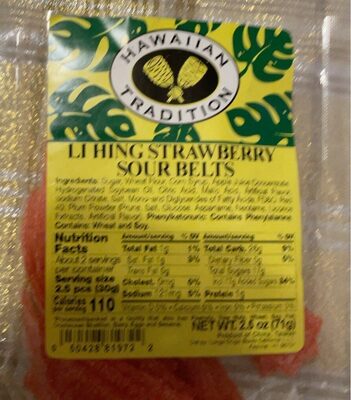 CVS Pharmacy, Inc.
Li Hing Strawberry Sour Belts, Li Hing Strawberry
High in added sugars — 34% DV per serving
367kcal
3.3Protein
3.3Fat
86.7Carbs
Ktm Services, Inc.
Sour Lychee Li Hing Gummies, Sour Lychee
High in added sugars — 36% DV per serving
350kcal
6.7Protein
0Fat
83.3Carbs
CVS Pharmacy, Inc.
Li Hing Gummy Bears, Li Hing
High in added sugars — 32% DV per serving
333kcal
6.7Protein
0Fat
76.7Carbs
CVS Pharmacy, Inc.
Li Hing Strawberry Sour Belts, Li Hing Strawberry
High in added sugars — 34% DV per serving
367kcal
3.3Protein
3.3Fat
86.7Carbs
Ktm Services, Inc.
Sour Lychee Li Hing Gummies, Sour Lychee
High in added sugars — 36% DV per serving
350kcal
6.7Protein
0Fat
83.3Carbs
CVS Pharmacy, Inc.
Li Hing Gummy Bears, Li Hing
High in added sugars — 32% DV per serving
333kcal
6.7Protein
0Fat
76.7Carbs