Mandarin Orange Whole Segments
Auto-generated content. This description was generated automatically and is pending editorial review. Inaccuracies are possible. Found a mistake? Contact us.
What it is
Mandarin orange whole segments are pieces of the fruit of the mandarin orange tree, a citrus fruit native to Asia. The segments are typically canned in a liquid, such as light syrup or juice, to preserve them and provide a ready-to-eat product.
Why it's used
Manufacturers use mandarin orange segments as a fruit component in various food products. They are commonly found in canned fruit mixes, fruit cups, salads, and desserts, adding a sweet and tangy citrus flavor and texture.
Health notes
Mandarin oranges are a source of vitamin C and fiber. The U.S. Food and Drug Administration (FDA) recognizes mandarin oranges as generally safe for consumption. International bodies like the Joint FAO/WHO Expert Committee on Food Additives (JECFA) and the European Food Safety Authority (EFSA) have evaluated many food ingredients, but specific evaluations for whole mandarin orange segments as a distinct ingredient are not typically listed. No significant health controversies are associated with the typical consumption of mandarin orange segments.
Allergen info
Mandarin oranges are not derived from any of the nine FDA major allergens. They do not contain gluten.
Products containing Mandarin Orange Whole Segments
Compare products →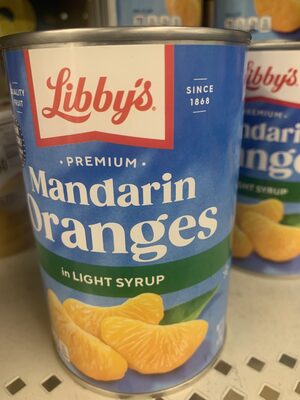 NTC Marketing, Inc.
Premium Mandarin Oranges Fruit In Light Syrup
66kcal
0Protein
0Fat
15.6Carbs
Hannaford Bros. Co.
Mandarin Oranges In Light Syrup
High in added sugars — 26% DV per serving
66kcal
0Protein
0Fat
15.6Carbs
Smart & Final Iris Corporation
Mandarin Whole Segment Oranges In Light Syrup, Mandarin In Light Syrup
50kcal
0.7Protein
0Fat
12.1Carbs
Food Town Stores Inc.
Mandarin Oranges In Light Syrup
66kcal
0Protein
0Fat
15.6Carbs
Supervalu, Inc.
Mandarin Oranges In Light Syrup
High in added sugars — 22% DV per serving
59kcal
0.8Protein
0Fat
15.1Carbs
NTC Marketing, Inc.
Premium Mandarin Oranges Fruit In Light Syrup
66kcal
0Protein
0Fat
15.6Carbs
Hannaford Bros. Co.
Mandarin Oranges In Light Syrup
High in added sugars — 26% DV per serving
66kcal
0Protein
0Fat
15.6Carbs
Smart & Final Iris Corporation
Mandarin Whole Segment Oranges In Light Syrup, Mandarin In Light Syrup
50kcal
0.7Protein
0Fat
12.1Carbs
Food Town Stores Inc.
Mandarin Oranges In Light Syrup
66kcal
0Protein
0Fat
15.6Carbs
Supervalu, Inc.
Mandarin Oranges In Light Syrup
High in added sugars — 22% DV per serving
59kcal
0.8Protein
0Fat
15.1Carbs
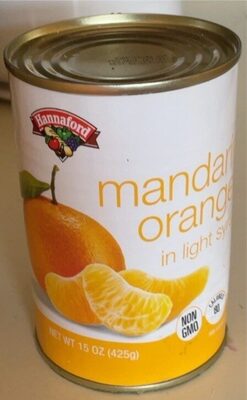 Hannaford Bros. Co.
Mandarin Oranges In Light Syrup, Mandarin Oranges
High in added sugars — 26% DV per serving
66kcal
0Protein
0Fat
15.6Carbs
Hannaford Bros. Co.
Mandarin Oranges In Light Syrup, Mandarin Oranges
High in added sugars — 26% DV per serving
66kcal
0Protein
0Fat
15.6Carbs
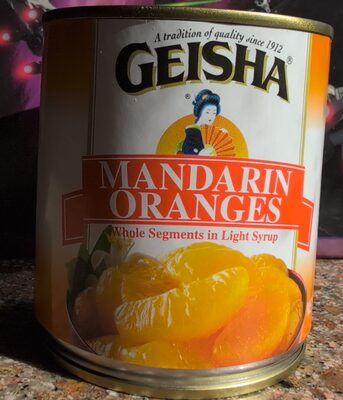 Kawasho Foods USA Inc.
Geisha Mandarin Oranges, 11 Oz
High in added sugars — 26% DV per serving
64kcal
0Protein
0Fat
15Carbs
Kawasho Foods USA Inc.
Geisha Mandarin Oranges, 11 Oz
High in added sugars — 26% DV per serving
64kcal
0Protein
0Fat
15Carbs
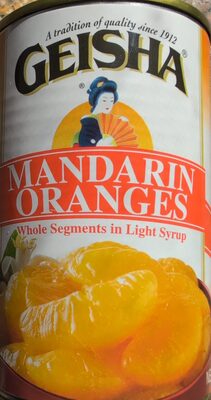 Kawasho Foods USA Inc.
Geisha Mandarin Oranges, 15 Oz
High in added sugars — 26% DV per serving
64kcal
0Protein
0Fat
15Carbs
World Finer Foods, Inc.
Mandarin Oranges
51kcal
0.6Protein
0Fat
12.2Carbs
Kawasho Foods USA Inc.
Geisha Mandarin Oranges, 15 Oz
High in added sugars — 26% DV per serving
64kcal
0Protein
0Fat
15Carbs
World Finer Foods, Inc.
Mandarin Oranges
51kcal
0.6Protein
0Fat
12.2Carbs