Organic Acai Pulp
Auto-generated content. This description was generated automatically and is pending editorial review. Inaccuracies are possible. Found a mistake? Contact us.
What it is
Acai pulp comes from the acai berry, a small, dark purple fruit native to Central and South America. The berries are typically harvested, pulped, and then frozen or freeze-dried to preserve their nutrients and flavor. The pulp is often used as a base for smoothies, bowls, and other frozen desserts.
Why it's used
Manufacturers use acai pulp primarily for its vibrant color, rich flavor, and nutritional profile. It adds a fruity taste and a deep purple hue to products. It is commonly found in frozen desserts, smoothies, juices, and snack bars.
Health notes
Acai is generally recognized as safe (GRAS) by the FDA for use in food. It is a source of antioxidants, fiber, and healthy fats. International bodies like JECFA have evaluated acai, but no specific numeric limits are set. Research suggests acai may have antioxidant benefits, but more studies are needed to confirm specific health effects at typical consumption levels.
Allergen info
Acai is not one of the nine major allergens recognized by the FDA. It does not contain gluten.
Products containing Organic Acai Pulp
Compare products →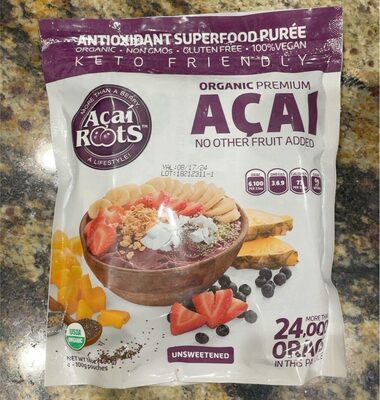 ACAI ROOTS
Pure Acai Antioxidant Superfood Puree
73kcal
2Protein
6Fat
4.8Carbs
ACAI ROOTS
Organic Acai Fruit Bar, Berry
138kcal
1.5Protein
3.1Fat
27.7Carbs
Bader Publishing
Matt's Munchies, Fruit Snack, Mango A, Mango A
321kcal
3.6Protein
0Fat
78.6Carbs
Acai Roots
Organic Premium Acai +Peanut Butter Sorbet, Acai +Peanut Butter
High in added sugars — 44% DV per serving
178kcal
0.8Protein
6.8Fat
28.8Carbs
ACAI ROOTS
Pure Acai Antioxidant Superfood Puree
73kcal
2Protein
6Fat
4.8Carbs
ACAI ROOTS
Organic Acai Fruit Bar, Berry
138kcal
1.5Protein
3.1Fat
27.7Carbs
Bader Publishing
Matt's Munchies, Fruit Snack, Mango A, Mango A
321kcal
3.6Protein
0Fat
78.6Carbs
Acai Roots
Organic Premium Acai +Peanut Butter Sorbet, Acai +Peanut Butter
High in added sugars — 44% DV per serving
178kcal
0.8Protein
6.8Fat
28.8Carbs
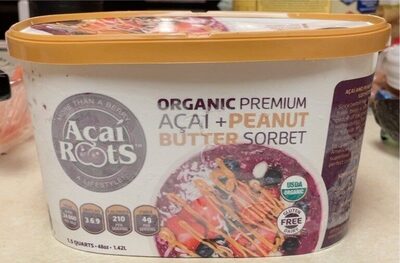 Acai Roots
Organic Premium Acai +Peanut Butter Sorbet, Peanut Butter
High in added sugars — 44% DV per serving
178kcal
2.5Protein
—Fat
28.8Carbs
Acai Roots
Organic Premium Acai +Peanut Butter Sorbet, Peanut Butter
High in added sugars — 44% DV per serving
178kcal
2.5Protein
—Fat
28.8Carbs
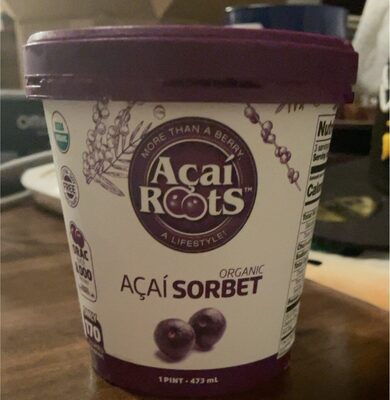 Acai Roots
Organic Premium Acai Sorbet, Acai
High in added sugars — 46% DV per serving
144kcal
0.8Protein
3.4Fat
28.8Carbs
Acai Roots
Organic Premium Acai Sorbet, Acai
High in added sugars — 46% DV per serving
144kcal
0.8Protein
3.4Fat
28.8Carbs
 Acai Roots
Organic Premium Acai Sorbet
High in added sugars — 34% DV per serving
144kcal
1.7Protein
3.0Fat
28.8Carbs
Hy-Vee, Inc.
Energy Acai And Banana Blend With Guarana Extract And Granola Bowl, Energy Acai And Banana Blend
73kcal
0.9Protein
2.0Fat
15Carbs
Acai Roots
Organic Premium Acai Sorbet
High in added sugars — 34% DV per serving
144kcal
1.7Protein
3.0Fat
28.8Carbs
Hy-Vee, Inc.
Energy Acai And Banana Blend With Guarana Extract And Granola Bowl, Energy Acai And Banana Blend
73kcal
0.9Protein
2.0Fat
15Carbs
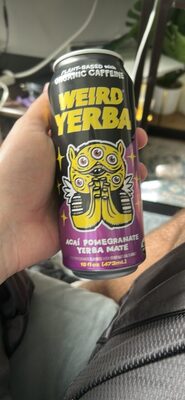 Weird Beverages LLC
Blue Pom Acai Yerba Mate, Blue Pom Acai
High in added sugars — 36% DV per serving
19kcal
0Protein
0Fat
4.0Carbs
Weird Beverages LLC
Blue Pom Acai Yerba Mate, Blue Pom Acai
High in added sugars — 36% DV per serving
19kcal
0Protein
0Fat
4.0Carbs
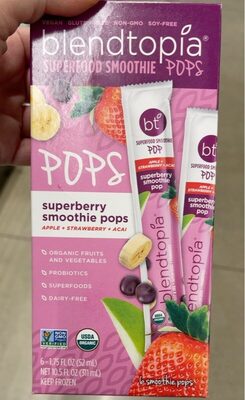 Peak Foods LLC
Apple + Strawberry + Acai Superberry Superfood Smoothie Pops, Apple; Strawberry; Acai
84kcal
1.3Protein
0Fat
18.7Carbs
Peak Foods LLC
Apple + Strawberry + Acai Superberry Superfood Smoothie Pops, Apple; Strawberry; Acai
84kcal
1.3Protein
0Fat
18.7Carbs