Penicillum Roqueforti
What is Penicillum Roqueforti?
Penicillium roqueforti is a type of mold used to make blue cheeses, such as Roquefort, Gorgonzola, and Stilton. It is a naturally occurring mold that gives these cheeses their characteristic blue veins and pungent flavor.
Is Penicillum Roqueforti vegan?
Penicillum Roqueforti is not animal-derived. Products that contain it can still include other animal-derived ingredients, so check the full ingredient list.
Is Penicillum Roqueforti gluten-free?
It does not contain gluten.
Is Penicillum Roqueforti a major allergen?
Penicillium roqueforti is not one of the nine major allergens.
What is Penicillum Roqueforti used for?
This mold is primarily used to impart a distinct blue cheese flavor and aroma to foods.
Is Penicillum Roqueforti safe?
Penicillium roqueforti is generally recognized as safe (GRAS) by the FDA for its use in food production, particularly in cheesemaking.
Why it's used
This mold is primarily used to impart a distinct blue cheese flavor and aroma to foods. It is most commonly found in dairy products like blue cheese itself, but can also be used in dressings, dips, and sauces where a blue cheese flavor is desired.
Health notes
Penicillium roqueforti is generally recognized as safe (GRAS) by the FDA for its use in food production, particularly in cheesemaking. It is a natural component of many fermented foods and is not associated with adverse health effects when consumed as part of these foods. International bodies like EFSA have also evaluated molds used in food, and JECFA has not set a numerical limit for this specific mold.
Allergen info
Penicillium roqueforti is not one of the nine major allergens. It is a mold, not derived from milk, eggs, fish, shellfish, tree nuts, peanuts, wheat, soy, or sesame. It does not contain gluten.
Foods that contain Penicillum Roqueforti
Compare products →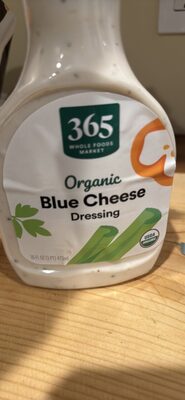 Whole Foods Market, Inc.
Blue Cheese Organic Dressing, Blue Cheese
267kcal
0Protein
26.7Fat
6.7Carbs
Whole Foods Market, Inc.
Blue Cheese Organic Dressing, Blue Cheese
267kcal
0Protein
26.7Fat
6.7Carbs
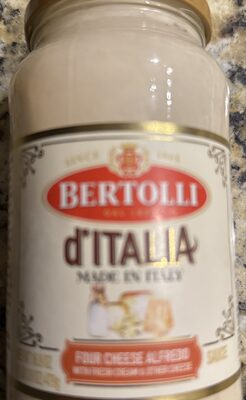 Mizkan America, Inc.
Four Cheese Alfredo With Cream & Other Cheese D'Italia Sauce, Four Cheese Alfredo
High in saturated fat — 25% DV per serving
183kcal
3.3Protein
16.7Fat
3.3Carbs
Wm. Bolthouse Farms Inc.
Bold Blue Cheese Greek Yogurt Dressing, Bold Blue Cheese
133kcal
6.7Protein
10Fat
6.7Carbs
Safeway, Inc.
Bacon Bleu Wedge Crisp Iceberg And Romaine Lettuces, Celery, Green And Red Cabbage And Radishes With Grape Tomatoes, Bacon Crumbles And Walnut Pieces In A Creamy Bleu Cheese Dressing Chopped Salad Bowl, Bacon Bleu Wedge
High in sodium — 27% DV per serving
High in saturated fat — 25% DV per serving
136kcal
3.3Protein
11.3Fat
4.2Carbs
Mizkan America, Inc.
Four Cheese Alfredo With Cream & Other Cheese D'Italia Sauce, Four Cheese Alfredo
High in saturated fat — 25% DV per serving
183kcal
3.3Protein
16.7Fat
3.3Carbs
Wm. Bolthouse Farms Inc.
Bold Blue Cheese Greek Yogurt Dressing, Bold Blue Cheese
133kcal
6.7Protein
10Fat
6.7Carbs
Safeway, Inc.
Bacon Bleu Wedge Crisp Iceberg And Romaine Lettuces, Celery, Green And Red Cabbage And Radishes With Grape Tomatoes, Bacon Crumbles And Walnut Pieces In A Creamy Bleu Cheese Dressing Chopped Salad Bowl, Bacon Bleu Wedge
High in sodium — 27% DV per serving
High in saturated fat — 25% DV per serving
136kcal
3.3Protein
11.3Fat
4.2Carbs
Learn more
Auto-generated content. This description was generated automatically and is pending editorial review. Inaccuracies are possible. Found a mistake? Contact us.