Pomegranate Puree
Auto-generated content. This description was generated automatically and is pending editorial review. Inaccuracies are possible. Found a mistake? Contact us.
What it is
Pomegranate puree is made from the whole pomegranate fruit, including the seeds (arils) and juice. The fruit is typically washed, then the arils are separated from the peel and pith. The arils are then pureed, often with some juice, to create a smooth consistency.
Why it's used
Pomegranate puree is used to add a distinct tart and sweet flavor, as well as a vibrant red color, to foods. It can also contribute to texture and moisture. Manufacturers often include it in yogurts, ice creams, cereals, dressings, sauces, and baked goods.
Health notes
Pomegranate puree is generally recognized as safe (GRAS) by the FDA when used as a food ingredient. It is a source of antioxidants, such as punicalagins and anthocyanins, which have been studied for potential health benefits. International bodies like EFSA have evaluated pomegranate extracts, but specific evaluations of the puree in food are less common. Research into the health effects of pomegranate consumption is ongoing, with some studies suggesting benefits for heart health and inflammation, but more research is needed to confirm these effects at typical dietary intake levels.
Allergen info
Pomegranate puree is not derived from any of the nine FDA major allergens. It does not contain gluten.
Products containing Pomegranate Puree
Compare products →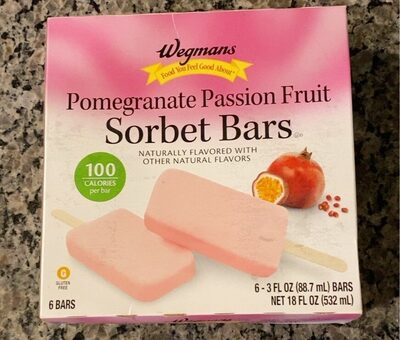 Wegmans Food Markets, Inc.
Pomegranate Passion Fruit Sorbet Bars, Pomegranate Passion Fruit
High in added sugars — 44% DV per serving
125kcal
0Protein
0Fat
31.2Carbs
Wegmans Food Markets, Inc.
Pomegranate Passion Fruit Flavored Sorbet, Pomegranate Passion Fruit
High in added sugars — 70% DV per serving
134kcal
0Protein
0Fat
31.5Carbs
Wegmans Food Markets, Inc.
Pomegranate Passion Fruit Sorbet Bars, Pomegranate Passion Fruit
High in added sugars — 44% DV per serving
125kcal
0Protein
0Fat
31.2Carbs
Wegmans Food Markets, Inc.
Pomegranate Passion Fruit Flavored Sorbet, Pomegranate Passion Fruit
High in added sugars — 70% DV per serving
134kcal
0Protein
0Fat
31.5Carbs