Red Salmon
Auto-generated content. This description was generated automatically and is pending editorial review. Inaccuracies are possible. Found a mistake? Contact us.
What it is
Red salmon is a type of salmon known for its vibrant red-orange flesh, which comes from its diet rich in crustaceans like krill. The most common species referred to as red salmon is sockeye salmon, found in the North Pacific Ocean. It is typically sold fresh, frozen, or canned.
Why it's used
Red salmon is primarily used as a protein source in various dishes, valued for its rich flavor and firm texture. It is often found in canned seafood products, as well as in fresh or frozen preparations like grilled salmon, salmon patties, and smoked salmon. Its natural color also contributes to its appeal in seafood dishes.
Health notes
Red salmon is a natural food source and is not subject to FDA additive regulations. It is a good source of protein, omega-3 fatty acids, and vitamin D. The World Health Organization (WHO) and the Food and Agriculture Organization of the United Nations (FAO) have evaluated fish and fish oils, recognizing their nutritional benefits. Evidence generally supports the cardiovascular benefits of consuming fish rich in omega-3 fatty acids.
Allergen info
Red salmon is a fish, which is one of the 9 FDA major allergens. It does not contain gluten.
Products containing Red Salmon
Compare products →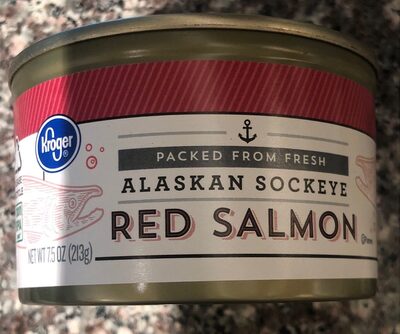 The Kroger Co.
Red Salmon Alaskan Sockeye, Red Salmon
High in cholesterol — 22% DV per serving
165kcal
23.5Protein
7.1Fat
0Carbs
Trident Seafoods Corp.
Rubinstein's Red Salmon, 7.5 Oz
High in cholesterol — 22% DV per serving
153kcal
20Protein
7.1Fat
0Carbs
Trident Seafoods Corp.
Rubinstein's Red Salmon, 14.75 Oz
High in cholesterol — 22% DV per serving
153kcal
20Protein
7.1Fat
0Carbs
Nagatanien, Sake Chazuke Seasoning
273kcal
18.2Protein
0Fat
36.4Carbs
Meijer, Inc.
Alaskan Wild Caught Red Sockeye Salmon, Alaskan
High in cholesterol — 22% DV per serving
153kcal
20Protein
7.1Fat
2.4Carbs
Tri-Union Seafoods, LLC
Wild Caught Traditional Style Alaskan Red Sockeye Salmon
High in cholesterol — 20% DV per serving
129kcal
22.4Protein
4.7Fat
0Carbs
The Kroger Co.
Red Salmon Alaskan Sockeye, Red Salmon
High in cholesterol — 22% DV per serving
165kcal
23.5Protein
7.1Fat
0Carbs
Trident Seafoods Corp.
Rubinstein's Red Salmon, 7.5 Oz
High in cholesterol — 22% DV per serving
153kcal
20Protein
7.1Fat
0Carbs
Trident Seafoods Corp.
Rubinstein's Red Salmon, 14.75 Oz
High in cholesterol — 22% DV per serving
153kcal
20Protein
7.1Fat
0Carbs
Nagatanien, Sake Chazuke Seasoning
273kcal
18.2Protein
0Fat
36.4Carbs
Meijer, Inc.
Alaskan Wild Caught Red Sockeye Salmon, Alaskan
High in cholesterol — 22% DV per serving
153kcal
20Protein
7.1Fat
2.4Carbs
Tri-Union Seafoods, LLC
Wild Caught Traditional Style Alaskan Red Sockeye Salmon
High in cholesterol — 20% DV per serving
129kcal
22.4Protein
4.7Fat
0Carbs