Auto-generated content.
This description was generated automatically and is pending editorial review.
Inaccuracies are possible. Found a mistake? Contact us.
Source
Not animal-derived
Allergen
No
Role in food
Manufacturers use trisodium citrate primarily as an acidity regulator, emulsifier, and preservative. It helps …
What it is
Trisodium citrate is a common food additive that is the sodium salt of citric acid. It is produced commercially by the neutralization of citric acid with a sodium compound, such as sodium hydroxide or sodium carbonate. It is typically found in powder form.
Why it's used
Manufacturers use trisodium citrate primarily as an acidity regulator, emulsifier, and preservative. It helps to control pH, prevent separation in dairy products and sauces, and extend shelf life. It is commonly found in processed cheeses, candies, jams, jellies, and beverages.
Health notes
Trisodium citrate is generally recognized as safe (GRAS) by the U.S. Food and Drug Administration (FDA). It has been evaluated by international bodies like the Joint FAO/WHO Expert Committee on Food Additives (JECFA) and the European Food Safety Authority (EFSA), which have assessed its safety for consumption. At typical levels used in food, it is not associated with adverse health effects. Evidence does not suggest significant health concerns related to its consumption in the amounts found in food.
Allergen info
Trisodium citrate is not derived from any of the nine major allergens recognized by the FDA. It does not contain gluten.
Note:
This site presents label data from USDA FoodData Central for general information. It is not medical advice.
Check the package label; formulations change.
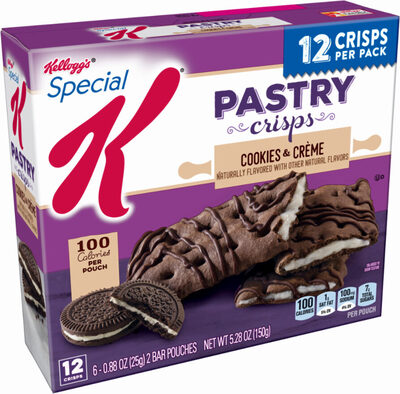 Kellogg Company US
Kellogg Special K Cereal Bars Cookies N' Creme 5.28Oz
402kcal
3.9Protein
8.8Fat
78.1Carbs
Kellogg Company US
Kellogg Special K Cereal Bars Cookies N' Creme 5.28Oz
402kcal
3.9Protein
8.8Fat
78.1Carbs