Sage Oil
What is Sage Oil?
Sage oil is an essential oil extracted from the leaves of the sage plant (Salvia officinalis). It is typically produced through steam distillation, a process where steam is passed through the plant material to release its volatile compounds, which are then condensed and collected.
Is Sage Oil vegan?
Sage Oil is not animal-derived. Products that contain it can still include other animal-derived ingredients, so check the full ingredient list.
Is Sage Oil gluten-free?
Sage oil is not derived from any of the nine FDA major allergens and does not contain gluten.
What is Sage Oil used for?
Sage oil is primarily used as a flavoring agent in food products, adding a distinct herbaceous and slightly peppery note.
Is Sage Oil safe?
Sage oil is generally recognized as safe (GRAS) by the FDA for use as a flavoring agent.
Why it's used
Sage oil is primarily used as a flavoring agent in food products, adding a distinct herbaceous and slightly peppery note. It is commonly found in savory dishes, processed meats, stuffing mixes, and some beverages. Its strong aroma and taste make it a potent ingredient, used in small quantities to enhance the overall flavor profile.
Health notes
Sage oil is generally recognized as safe (GRAS) by the FDA for use as a flavoring agent. Regulatory bodies like JECFA and EFSA have evaluated sage and its constituents, but specific evaluations for sage oil as a food additive may vary. At typical consumption levels as a flavoring, it is not associated with adverse health effects. Research into the potential health benefits of sage compounds is ongoing, but no significant health concerns have been raised regarding its use as a food ingredient.
Allergen info
Sage oil is not derived from any of the nine FDA major allergens and does not contain gluten.
Foods that contain Sage Oil
Compare products →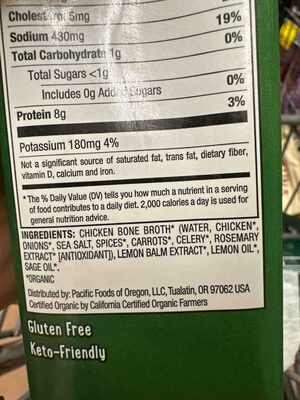 CAMPBELL SOUP COMPANY
Pacific Foods Organic Chicken Bone Broth With Lemon Balm and Sage, 32 oz Carton
17kcal
3.4Protein
0.4Fat
0.4Carbs
Musicland Productions, Inc.
Bacon Wrapped Jalapenos Stuffed With Sausage And Cheese
High in saturated fat — 25% DV per serving
High in cholesterol — 33% DV per serving
211kcal
5.6Protein
18.3Fat
5.6Carbs
Louisiana Fish Fry Ltd.
Traditional Herbs Stuffing Mix
393kcal
10.7Protein
3.6Fat
75Carbs
CAMPBELL SOUP COMPANY
Pacific Foods Organic Chicken Bone Broth With Lemon Balm and Sage, 32 oz Carton
17kcal
3.4Protein
0.4Fat
0.4Carbs
Musicland Productions, Inc.
Bacon Wrapped Jalapenos Stuffed With Sausage And Cheese
High in saturated fat — 25% DV per serving
High in cholesterol — 33% DV per serving
211kcal
5.6Protein
18.3Fat
5.6Carbs
Louisiana Fish Fry Ltd.
Traditional Herbs Stuffing Mix
393kcal
10.7Protein
3.6Fat
75Carbs
Learn more
Auto-generated content. This description was generated automatically and is pending editorial review. Inaccuracies are possible. Found a mistake? Contact us.