Sauteed In Vegetable Oil
Auto-generated content. This description was generated automatically and is pending editorial review. Inaccuracies are possible. Found a mistake? Contact us.
What it is
Vegetable oil is a fat extracted from plants, typically from seeds, fruits, or nuts. It is made through processes like pressing or solvent extraction. When food is "sauteed in vegetable oil," it means it has been cooked quickly in a small amount of this oil.
Why it's used
Vegetable oils are widely used as cooking mediums in food preparation. They help brown foods, add flavor, and contribute to a desirable texture. They are frequently found in prepared foods, including frozen appetizers and poultry dishes.
Health notes
Vegetable oils are a source of dietary fat. The Dietary Guidelines for Americans (2025-2030) recommend limiting saturated fat intake to less than 10% of daily calories. The FDA generally recognizes common vegetable oils as safe for consumption. Historically, some vegetable oils were partially hydrogenated, creating artificial trans fats; however, partially hydrogenated oils (PHOs) are no longer generally recognized as safe (GRAS) by the FDA since 2018, effectively removing most artificial trans fat from the food supply.
Allergen info
While some vegetable oils are derived from major allergens like soy or peanuts, highly refined versions of these oils are generally not considered major allergens by the FDA because the allergenic proteins are removed during processing. Specific labeling depends on the source and refining method.
Products containing Sauteed In Vegetable Oil
Compare products →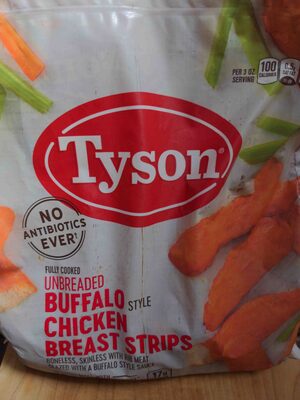 Tyson Foods, Inc.
Buffalo Style Unbreaded Chicken Breast Strips, Buffalo Style
High in sodium — 20% DV per serving
119kcal
20.2Protein
3.6Fat
1.2Carbs
Tyson Foods, Inc.
Buffalo Style Unbreaded Chicken Breast Strips, Buffalo Style
High in sodium — 20% DV per serving
119kcal
20.2Protein
3.6Fat
1.2Carbs
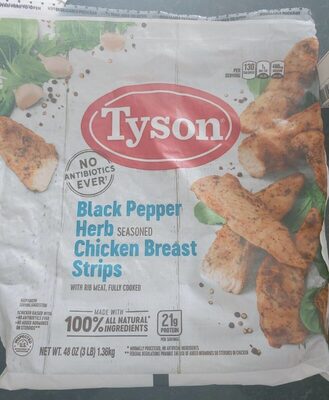 Tyson Foods, Inc.
Black Pepper Herb Seasoned Fully Cooked Chicken Breast Strips With Rib Meat, Black Pepper Herb Seasoned
High in sodium — 23% DV per serving
High in cholesterol — 22% DV per serving
155kcal
25Protein
4.8Fat
2.4Carbs
Tyson Foods, Inc.
Black Pepper Herb Seasoned Fully Cooked Chicken Breast Strips With Rib Meat, Black Pepper Herb Seasoned
High in sodium — 23% DV per serving
High in cholesterol — 22% DV per serving
155kcal
25Protein
4.8Fat
2.4Carbs
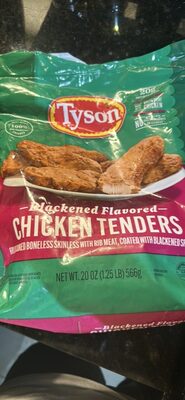 Tyson Foods, Inc.
Blackened Chicken Breast Strips, Blackened Chicken
High in sodium — 21% DV per serving
High in cholesterol — 22% DV per serving
131kcal
23.8Protein
3.6Fat
1.2Carbs
Tyson Foods, Inc.
Blackened Chicken Breast Strips, Blackened Chicken
High in sodium — 21% DV per serving
High in cholesterol — 22% DV per serving
131kcal
23.8Protein
3.6Fat
1.2Carbs
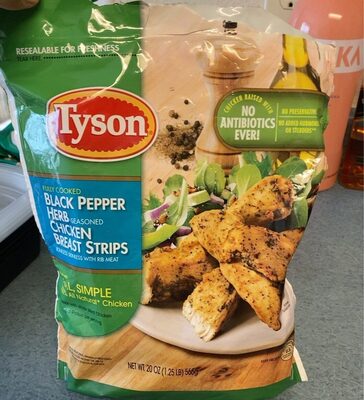 Tyson Foods, Inc.
Black Pepper Herb Seasoned Fully Cooked Chicken Breast Strips Boneless Skinless With Rib Meat, Black Pepper Herb Seasoned
High in sodium — 23% DV per serving
High in cholesterol — 22% DV per serving
155kcal
25Protein
4.8Fat
2.4Carbs
Tyson Foods, Inc.
Black Pepper Herb Seasoned Fully Cooked Chicken Breast Strips Boneless Skinless With Rib Meat, Black Pepper Herb Seasoned
High in sodium — 23% DV per serving
High in cholesterol — 22% DV per serving
155kcal
25Protein
4.8Fat
2.4Carbs
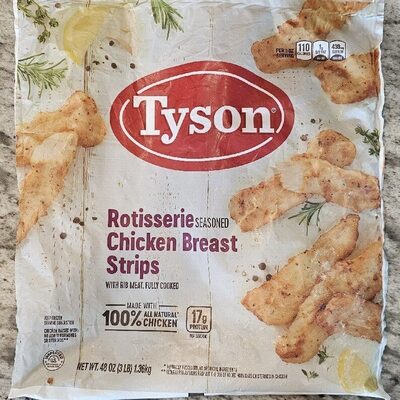 Tyson Foods, Inc.
Rotisserie Seasoned Chicken Breast Strips, Rotisserie Seasoned
131kcal
20.2Protein
4.2Fat
2.4Carbs
Tyson Foods, Inc.
Rotisserie Seasoned Chicken Breast Strips, Rotisserie Seasoned
131kcal
20.2Protein
4.2Fat
2.4Carbs
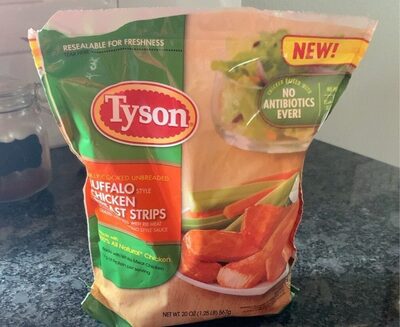 Tyson Foods, Inc.
Buffalo Style Chicken Breast Strips Boneless, Skinless With Rib Meat Glazed With A Buffalo Style Sauce, Buffalo Style Chicken
High in sodium — 20% DV per serving
119kcal
20.2Protein
3.6Fat
1.2Carbs
Tyson Foods, Inc.
Buffalo Style Chicken Breast Strips Boneless, Skinless With Rib Meat Glazed With A Buffalo Style Sauce, Buffalo Style Chicken
High in sodium — 20% DV per serving
119kcal
20.2Protein
3.6Fat
1.2Carbs