Sodium Glycolate
Auto-generated content. This description was generated automatically and is pending editorial review. Inaccuracies are possible. Found a mistake? Contact us.
What it is
Sodium glycolate is the sodium salt of glycolic acid. Glycolic acid is a naturally occurring organic acid found in some fruits and plants, but it is typically produced industrially for commercial use. It is often synthesized from chemicals like formaldehyde or ethylene glycol.
Why it's used
Sodium glycolate is primarily used as a humectant, meaning it helps retain moisture in foods. This function helps to keep baked goods like cakes, cupcakes, and snack cakes from drying out, improving their texture and shelf life. It can also act as a pH adjuster.
Health notes
Sodium glycolate is generally recognized as safe (GRAS) by the U.S. Food and Drug Administration (FDA) for use in food. Regulatory bodies like the Joint FAO/WHO Expert Committee on Food Additives (JECFA) and the European Food Safety Authority (EFSA) have evaluated similar compounds, but specific evaluations for sodium glycolate's safety at typical food intake levels are not widely publicized. At the levels used in food, it is not expected to cause adverse health effects.
Allergen info
Sodium glycolate is not derived from or one of the FDA's nine major food allergens. It does not contain gluten.
Products containing Sodium Glycolate
Compare products →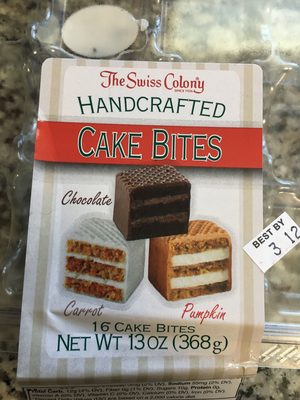 Colony Brands, Inc.
Cake Bites, Chocolate, Carrot, Pumpkin
435kcal
0Protein
26.1Fat
52.2Carbs
Wal-Mart Stores, Inc.
Petit Fours Handcrafted Gourmet Layer Cakes, Chocolate & Vanilla
High in saturated fat — 65% DV per serving
480kcal
2.7Protein
25.3Fat
61.3Carbs
Colony Brands, Inc.
Carrot Pumpkin Chocolate Cake Bites, Carrot Pumpkin Chocolate
435kcal
4.3Protein
26.1Fat
52.2Carbs
Colony Brands, Inc.
Chocolate Vanilla Red Velvet Cake Bites, Chocolate Vanilla Red Velvet
455kcal
0Protein
22.7Fat
59.1Carbs
Colony Brands, Inc.
Pumpkin, Chocolate, Carrot Harvest Cake Bites, Pumpkin, Chocolate, Carrot
High in added sugars — 22% DV per serving
458kcal
0Protein
25Fat
54.2Carbs
Colony Brands, Inc.
Cake Bites, Chocolate, Carrot, Pumpkin
435kcal
0Protein
26.1Fat
52.2Carbs
Wal-Mart Stores, Inc.
Petit Fours Handcrafted Gourmet Layer Cakes, Chocolate & Vanilla
High in saturated fat — 65% DV per serving
480kcal
2.7Protein
25.3Fat
61.3Carbs
Colony Brands, Inc.
Carrot Pumpkin Chocolate Cake Bites, Carrot Pumpkin Chocolate
435kcal
4.3Protein
26.1Fat
52.2Carbs
Colony Brands, Inc.
Chocolate Vanilla Red Velvet Cake Bites, Chocolate Vanilla Red Velvet
455kcal
0Protein
22.7Fat
59.1Carbs
Colony Brands, Inc.
Pumpkin, Chocolate, Carrot Harvest Cake Bites, Pumpkin, Chocolate, Carrot
High in added sugars — 22% DV per serving
458kcal
0Protein
25Fat
54.2Carbs
 Colony Brands, Inc.
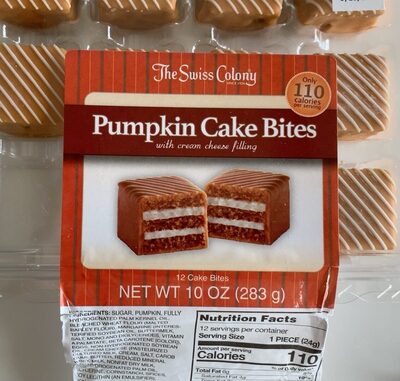
Pumpkin Cake Bites With Cream Cheese Filling, Pumpkin
High in added sugars — 20% DV per serving
458kcal
4.2Protein
25Fat
54.2Carbs
Colony Brands, Inc.
Harvest Cake Bites, Pumpkin, Chocolate, Carrot
High in added sugars — 20% DV per serving
435kcal
0Protein
26.1Fat
56.5Carbs
Colony Brands, Inc.
Pumpkin Cake Bites With Cream Cheese Filling, Pumpkin
High in added sugars — 20% DV per serving
458kcal
4.2Protein
25Fat
54.2Carbs
Colony Brands, Inc.
Harvest Cake Bites, Pumpkin, Chocolate, Carrot
High in added sugars — 20% DV per serving
435kcal
0Protein
26.1Fat
56.5Carbs