White Chocolate Contains: 26% Cocoa Solids Minimum
Auto-generated content. This description was generated automatically and is pending editorial review. Inaccuracies are possible. Found a mistake? Contact us.
What it is
White chocolate is a type of chocolate made from cocoa butter, sugar, and milk solids. Unlike milk or dark chocolate, it does not contain cocoa solids, which give chocolate its brown color and characteristic flavor. It is typically creamy and sweet.
Why it's used
Manufacturers use white chocolate as a confectionery ingredient and flavoring. Its sweet, creamy taste makes it popular in baked goods, desserts, and candies. It is often used as a coating, filling, or decorative element.
Health notes
White chocolate is generally recognized as safe (GRAS) by the FDA when used as intended. It is primarily a source of sugar and fat. Regulatory bodies like JECFA and EFSA have evaluated cocoa butter and milk solids, but not white chocolate as a distinct product. Evidence does not link typical consumption of white chocolate to specific health benefits or risks, beyond those associated with high sugar and fat intake.
Allergen info
White chocolate is not a major allergen itself. However, it typically contains milk solids, which are a major allergen. It does not contain gluten.
Products containing White Chocolate Contains: 26% Cocoa Solids Minimum
Compare products →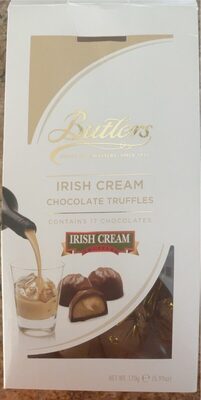 GS1 Ireland
Irish Cream Chocolate Truffles, Irish Cream
High in saturated fat — 25% DV per serving
High in added sugars — 26% DV per serving
480kcal
6.7Protein
26.7Fat
53.3Carbs
GS1 Ireland
Famous Irish Chocolate Collection - Irish Cream Liqueur, Irish Whiskey, Irish Coffee & Irish Gin Chocolate Truffles, Famous Irish
High in saturated fat — 20% DV per serving
High in added sugars — 22% DV per serving
512kcal
8Protein
32Fat
48Carbs
GS1 Ireland
Irish Cream Chocolate Truffles, Irish Cream
High in saturated fat — 25% DV per serving
High in added sugars — 26% DV per serving
480kcal
6.7Protein
26.7Fat
53.3Carbs
GS1 Ireland
Famous Irish Chocolate Collection - Irish Cream Liqueur, Irish Whiskey, Irish Coffee & Irish Gin Chocolate Truffles, Famous Irish
High in saturated fat — 20% DV per serving
High in added sugars — 22% DV per serving
512kcal
8Protein
32Fat
48Carbs