Whole Oysters
Auto-generated content. This description was generated automatically and is pending editorial review. Inaccuracies are possible. Found a mistake? Contact us.
What it is
Whole oysters are bivalve mollusks that live in marine and brackish habitats. They are typically harvested from the wild or farmed. After harvesting, they may be cleaned and processed for consumption.
Why it's used
Whole oysters are often sold canned or fresh for direct consumption. They are a popular ingredient in seafood dishes, chowders, and appetizers. Their briny flavor and tender texture are prized in culinary applications.
Health notes
Oysters are a natural source of protein, vitamins, and minerals. The FDA considers oysters a safe and wholesome food. International bodies like JECFA have evaluated oysters and their components. As with any seafood, there is a risk of foodborne illness if not handled or cooked properly.
Allergen info
Oysters are classified as a shellfish, which is one of the 9 FDA major allergens. They do not contain gluten.
Products containing Whole Oysters
Compare products →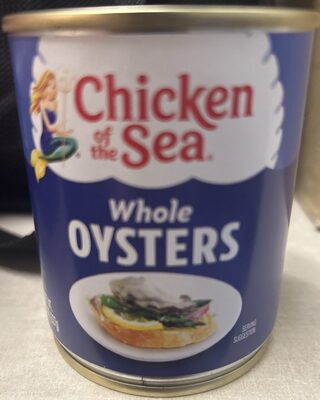 Tri-Union Seafoods, LLC
Chicken Of The Sea, Whole Oysters
107kcal
14.3Protein
3.6Fat
3.6Carbs
Transnational Foods, Inc.
Pampa, Boiled Oysters
125kcal
16.1Protein
5.4Fat
1.8Carbs
Tri-Union Seafoods, LLC
Chicken Of The Sea, Whole Oysters
107kcal
14.3Protein
3.6Fat
3.6Carbs
Transnational Foods, Inc.
Pampa, Boiled Oysters
125kcal
16.1Protein
5.4Fat
1.8Carbs
 Crown Prince, Inc.
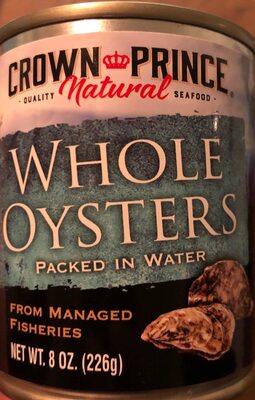
Whole Oysters Packed In Water
High in sodium — 20% DV per serving
High in cholesterol — 38% DV per serving
141kcal
13.3Protein
9.6Fat
0Carbs
Milky Way Int'L Trading Corp
Oysters Ostiones
High in sodium — 21% DV per serving
126kcal
17.0Protein
5.2Fat
3.0Carbs
Transnational Foods, Inc.
Boiled Oysters
125kcal
16.1Protein
5.4Fat
1.8Carbs
Crown Prince, Inc.
Whole Oysters Packed In Water
High in sodium — 20% DV per serving
High in cholesterol — 38% DV per serving
141kcal
13.3Protein
9.6Fat
0Carbs
Milky Way Int'L Trading Corp
Oysters Ostiones
High in sodium — 21% DV per serving
126kcal
17.0Protein
5.2Fat
3.0Carbs
Transnational Foods, Inc.
Boiled Oysters
125kcal
16.1Protein
5.4Fat
1.8Carbs