Mollusks
Auto-generated content. This description was generated automatically and is pending editorial review. Inaccuracies are possible. Found a mistake? Contact us.
What it is
Mollusks are a large group of invertebrate animals that live in aquatic environments. This category includes well-known shellfish like oysters, clams, mussels, and scallops. They are typically harvested from the wild or farmed for consumption.
Why it's used
Mollusks are consumed as a food source, often prepared by boiling, steaming, frying, or baking. They are frequently found in canned seafood products, seafood mixes, and as ingredients in dishes like chowders and pasta sauces. Their natural flavor and texture are the primary reasons for their use.
Health notes
Mollusks are a natural food source and are not typically regulated as food additives. They are a good source of protein, vitamins, and minerals. However, some individuals may have allergic reactions to mollusks. The FDA recognizes mollusks as a food source.
Allergen info
Mollusks are classified as a major allergen by the FDA, specifically within the 'shellfish' category. This means they must be clearly declared on food labels. Gluten is not typically associated with mollusks themselves.
Products containing Mollusks
Compare products →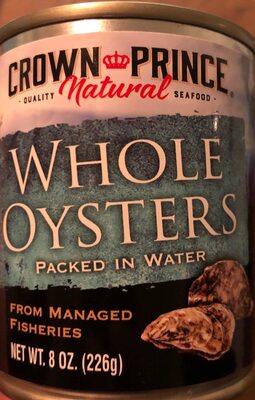 Crown Prince, Inc.
Whole Oysters Packed In Water
High in sodium — 20% DV per serving
High in cholesterol — 38% DV per serving
141kcal
13.3Protein
9.6Fat
0Carbs
Crown Prince, Inc.
Whole Oysters Packed In Water
High in sodium — 20% DV per serving
High in cholesterol — 38% DV per serving
141kcal
13.3Protein
9.6Fat
0Carbs
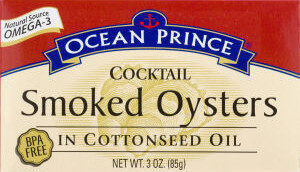 Crown Prince, Inc.
Cocktail Smoked Oysters In Cottonseed Oil, Cocktail
High in cholesterol — 35% DV per serving
200kcal
21.5Protein
12.3Fat
0Carbs
Crown Prince, Inc.
Boiled Baby Clams
High in sodium — 31% DV per serving
High in cholesterol — 47% DV per serving
85kcal
16.2Protein
1.1Fat
3.5Carbs
Crown Prince, Inc.
Mildly Spiced Fancy Whole Smoked Oysters With Red Chili Pepper, Mildly Spiced With Red Chili Pepper
High in cholesterol — 32% DV per serving
246kcal
20Protein
16.9Fat
3.1Carbs
Crown Prince, Inc.
Cocktail Smoked Oysters In Cottonseed Oil, Cocktail
High in cholesterol — 35% DV per serving
200kcal
21.5Protein
12.3Fat
0Carbs
Crown Prince, Inc.
Boiled Baby Clams
High in sodium — 31% DV per serving
High in cholesterol — 47% DV per serving
85kcal
16.2Protein
1.1Fat
3.5Carbs
Crown Prince, Inc.
Mildly Spiced Fancy Whole Smoked Oysters With Red Chili Pepper, Mildly Spiced With Red Chili Pepper
High in cholesterol — 32% DV per serving
246kcal
20Protein
16.9Fat
3.1Carbs