And Carob Bean Gum
Auto-generated content. This description was generated automatically and is pending editorial review. Inaccuracies are possible. Found a mistake? Contact us.
What it is
Carob bean gum, also known as locust bean gum, is a thickening and stabilizing agent derived from the seeds of the carob tree (Ceratonia siliqua). The seeds are ground into a powder to create the gum.
Why it's used
Manufacturers use carob bean gum to improve the texture and consistency of food products. It acts as a thickener, stabilizer, and emulsifier, preventing ingredients from separating. It is commonly found in dairy products like yogurt and ice cream, as well as in sauces, baked goods, and dressings.
Health notes
Carob bean gum is generally recognized as safe (GRAS) by the U.S. Food and Drug Administration (FDA). It is a dietary fiber and is not expected to cause adverse health effects when consumed in typical amounts. International bodies like the Joint FAO/WHO Expert Committee on Food Additives (JECFA) and the European Food Safety Authority (EFSA) have evaluated carob bean gum, and it is permitted for use in many countries. There are no widespread controversies regarding its safety.
Allergen info
Carob bean gum is not derived from any of the nine FDA major allergens and does not contain gluten.
Products containing And Carob Bean Gum
Compare products →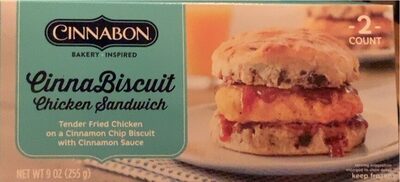 Golden West Trading, Inc.
Cinnabiscuit Chicken Sandwich Tender Fried Chicken On A Cinnamon Chip Biscuit With Cinnamon Sauce, Cinnabiscuit Chicken Sandwich
High in sodium — 30% DV per serving
High in saturated fat — 23% DV per serving
High in added sugars — 22% DV per serving
250kcal
9.4Protein
9.4Fat
32.0Carbs
Belstel Foods, Inc.
Vanilla Bean Blend Greek Low-Fat Yogurt, Vanilla Bean Blend
100kcal
8.2Protein
1.5Fat
8.2Carbs
Golden West Trading, Inc.
Cinnabiscuit Chicken Sandwich Tender Fried Chicken On A Cinnamon Chip Biscuit With Cinnamon Sauce, Cinnabiscuit Chicken Sandwich
High in sodium — 30% DV per serving
High in saturated fat — 23% DV per serving
High in added sugars — 22% DV per serving
250kcal
9.4Protein
9.4Fat
32.0Carbs
Belstel Foods, Inc.
Vanilla Bean Blend Greek Low-Fat Yogurt, Vanilla Bean Blend
100kcal
8.2Protein
1.5Fat
8.2Carbs
 Schnuck Markets, Inc.
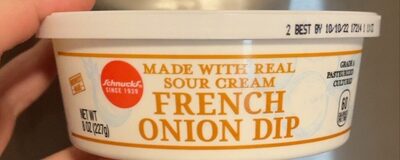
French Onion Dip, French Onion
200kcal
3.3Protein
16.7Fat
6.7Carbs
Schnuck Markets, Inc.
French Onion Dip, French Onion
200kcal
3.3Protein
16.7Fat
6.7Carbs
 Schnuck Markets, Inc.
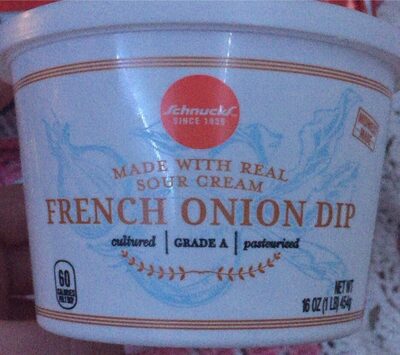
French Onion Dip, French Onion
200kcal
3.3Protein
16.7Fat
6.7Carbs
Schnuck Markets, Inc.
French Onion Dip, French Onion
200kcal
3.3Protein
16.7Fat
6.7Carbs
 The Real Good Food Company LLC
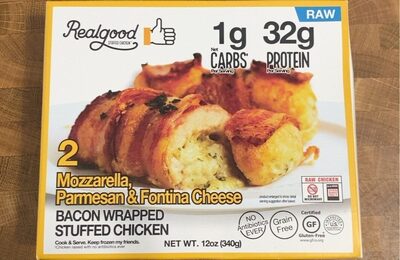
Realgood Foods Co. Bacon-Wrapped Stuffed Chicken, 2 Count, 12 Oz, Cheese
High in sodium — 43% DV per serving
High in saturated fat — 65% DV per serving
High in cholesterol — 43% DV per serving
235kcal
20.6Protein
16.5Fat
0.6Carbs
The Real Good Food Company LLC
Realgood Foods Co. Bacon-Wrapped Stuffed Chicken, 2 Count, 12 Oz, Cheese
High in sodium — 43% DV per serving
High in saturated fat — 65% DV per serving
High in cholesterol — 43% DV per serving
235kcal
20.6Protein
16.5Fat
0.6Carbs