Baby Lettuce
Auto-generated content. This description was generated automatically and is pending editorial review. Inaccuracies are possible. Found a mistake? Contact us.
What it is
Baby lettuce refers to young, tender leaves of various lettuce varieties, such as romaine, butterhead, or red leaf, harvested at an early stage of growth. These leaves are typically smaller and have a more delicate texture and milder flavor compared to mature lettuce. It is grown from seeds, like other leafy greens, and harvested before reaching full size.
Why it's used
Baby lettuce is primarily used as a fresh ingredient in salads, often mixed with other greens to create 'spring mix' or 'mesclun' blends. Manufacturers add it to packaged salads and meal kits to provide a fresh, crisp texture and mild flavor. It is also used as a garnish or in sandwiches and wraps.
Health notes
Baby lettuce is considered a whole food and is generally recognized as safe (GRAS) for consumption. Like other leafy greens, it is a source of vitamins, minerals, and dietary fiber. There are no specific regulatory evaluations by JECFA or EFSA for baby lettuce as a food additive, as it is consumed as a primary food ingredient. No notable controversies are associated with its consumption at typical intake levels.
Allergen info
Not a major allergen.
Products containing Baby Lettuce
Compare products →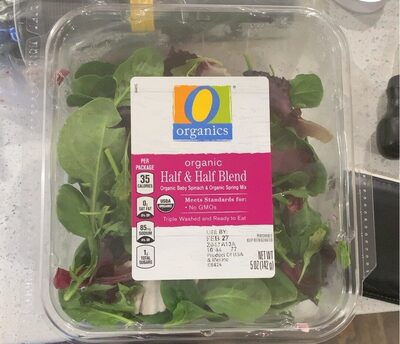 Glencourt Inc.
Half & Half Blend Baby Spinach & Spring Mix, Half & Half Blend
21kcal
2.1Protein
0Fat
3.5Carbs
Glencourt Inc.
Half & Half Blend Baby Spinach & Spring Mix, Half & Half Blend
21kcal
2.1Protein
0Fat
3.5Carbs
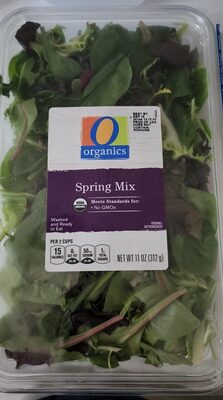 Glencourt Inc.
Spring Mix, Spring
18kcal
1.2Protein
0Fat
3.5Carbs
Glencourt Inc.
Spring Mix, Spring
18kcal
1.2Protein
0Fat
3.5Carbs
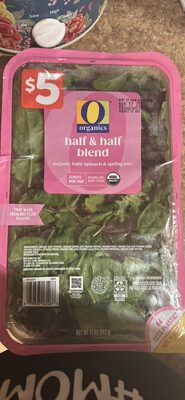 Glencourt Inc.
Half & Half Blend Baby Spinach & Spring Mix, Half & Half Blend
24kcal
2.4Protein
0Fat
3.5Carbs
Glencourt Inc.
Fresh Herb Blend, Fresh Herb
18kcal
2.4Protein
0Fat
3.5Carbs
Glencourt Inc.
Fresh Herb Blend, Fresh Herb
18kcal
2.4Protein
0Fat
3.5Carbs
Glencourt Inc.
Half & Half Blend Baby Spinach & Spring Mix, Half & Half Blend
24kcal
2.4Protein
0Fat
3.5Carbs
Glencourt Inc.
Fresh Herb Blend, Fresh Herb
18kcal
2.4Protein
0Fat
3.5Carbs
Glencourt Inc.
Fresh Herb Blend, Fresh Herb
18kcal
2.4Protein
0Fat
3.5Carbs