Baby Red Romaine
What is Baby Red Romaine?
Baby Red Romaine is a variety of romaine lettuce characterized by its smaller size and reddish-purple outer leaves. It is grown for its tender leaves and mild flavor, often harvested at a young stage. It is typically sold fresh and used in salads and as a garnish.
Is Baby Red Romaine vegan?
Baby Red Romaine is not animal-derived. Products that contain it can still include other animal-derived ingredients, so check the full ingredient list.
Is Baby Red Romaine gluten-free?
It does not contain gluten.
Is Baby Red Romaine a major allergen?
Baby Red Romaine is not derived from any of the 9 FDA major allergens.
What is Baby Red Romaine used for?
Manufacturers use Baby Red Romaine primarily as a fresh ingredient in salads and as a decorative element in prepared foods.
Is Baby Red Romaine safe?
Baby Red Romaine is a whole food and is generally recognized as safe by the FDA when consumed as part of a normal diet.
Why it's used
Manufacturers use Baby Red Romaine primarily as a fresh ingredient in salads and as a decorative element in prepared foods. Its crisp texture and mild taste make it a versatile base for various salad combinations, and its color adds visual appeal to platters and dishes.
Health notes
Baby Red Romaine is a whole food and is generally recognized as safe by the FDA when consumed as part of a normal diet. It provides vitamins, minerals, and fiber. Regulatory bodies like EFSA and JECFA have not specifically evaluated this vegetable as a food additive, as it is a natural food product.
Allergen info
Baby Red Romaine is not derived from any of the 9 FDA major allergens. It does not contain gluten.
Foods that contain Baby Red Romaine
Compare products →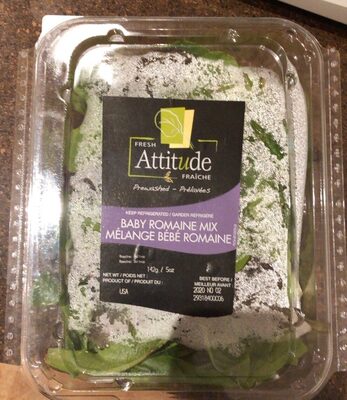 FRESH ATTITUDE
Fresh Attitude, Baby Romaine Mix
30kcal
2Protein
0.4Fat
4Carbs
ATTITUDE FRAICHE
Attitude Fraiche, Baby Romaine Mix
30kcal
2Protein
0.4Fat
4Carbs
Hearthside USA, LLC
Cobb Salad With White Meat Chicken & Bacon
High in sodium — 69% DV per serving
High in saturated fat — 50% DV per serving
High in cholesterol — 87% DV per serving
158kcal
8.8Protein
11.9Fat
3.9Carbs
Hearthside USA, LLC
Fall Harvest Salad
High in saturated fat — 25% DV per serving
128kcal
3.0Protein
8.8Fat
10.1Carbs
Green Cuisine LLC
Pecan & Blue Cheese Salad
High in saturated fat — 20% DV per serving
169kcal
3.2Protein
12.9Fat
10.5Carbs
FRESH ATTITUDE
Fresh Attitude, Baby Romaine Mix
30kcal
2Protein
0.4Fat
4Carbs
ATTITUDE FRAICHE
Attitude Fraiche, Baby Romaine Mix
30kcal
2Protein
0.4Fat
4Carbs
Hearthside USA, LLC
Cobb Salad With White Meat Chicken & Bacon
High in sodium — 69% DV per serving
High in saturated fat — 50% DV per serving
High in cholesterol — 87% DV per serving
158kcal
8.8Protein
11.9Fat
3.9Carbs
Hearthside USA, LLC
Fall Harvest Salad
High in saturated fat — 25% DV per serving
128kcal
3.0Protein
8.8Fat
10.1Carbs
Green Cuisine LLC
Pecan & Blue Cheese Salad
High in saturated fat — 20% DV per serving
169kcal
3.2Protein
12.9Fat
10.5Carbs
Auto-generated content. This description was generated automatically and is pending editorial review. Inaccuracies are possible. Found a mistake? Contact us.