Auto-generated content.
This description was generated automatically and is pending editorial review.
Inaccuracies are possible. Found a mistake? Contact us.
Source
Not animal-derived
Allergen
No
Role in food
Carrot stock is used as a base for soups, stews, sauces, and gravies, adding …
What it is
Carrot stock is a liquid made by simmering carrots, often with other vegetables and herbs, to extract their flavor and color. It is typically prepared by boiling chopped carrots in water, sometimes with added aromatics like onions and celery, and then straining the solids to yield a flavorful liquid base. It can be made from fresh or dried carrots.
Why it's used
Carrot stock is used as a base for soups, stews, sauces, and gravies, adding a subtle sweetness and earthy flavor. Manufacturers use it to enhance the overall taste profile of savory dishes and to contribute a natural orange hue. It is commonly found in canned soups, cooking sauces, and ethnic food products.
Health notes
Carrot stock is generally recognized as safe (GRAS) by the FDA when used as a food ingredient. It is a source of vitamins and minerals naturally present in carrots. International bodies like JECFA have evaluated ingredients derived from vegetables, but specific evaluations for carrot stock as a standalone ingredient are not widely published. At typical consumption levels, it poses no known health risks.
Allergen info
Carrot stock is not derived from any of the nine FDA major allergens. It does not contain gluten.
Note:
This site presents label data from USDA FoodData Central for general information. It is not medical advice.
Check the package label; formulations change.
 More Than Gourmet
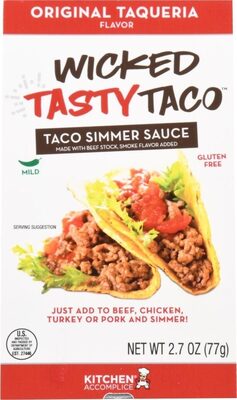
Mild Original Taqueria Taco Simmer Sauce, Original Taqueria
192kcal
7.7Protein
0Fat
38.5Carbs
More Than Gourmet
Mild Original Taqueria Taco Simmer Sauce, Original Taqueria
192kcal
7.7Protein
0Fat
38.5Carbs