Contains Less Than 2%: Sodium Bicarbonate
What is Contains Less Than 2%: Sodium Bicarbonate?
Sodium bicarbonate is a white crystalline powder, also known as baking soda. It is a salt of carbonic acid, naturally occurring in mineral deposits and also produced industrially. It is commonly used as a leavening agent in baking.
Is Contains Less Than 2%: Sodium Bicarbonate vegan?
Contains Less Than 2%: Sodium Bicarbonate is not animal-derived. Products that contain it can still include other animal-derived ingredients, so check the full ingredient list.
Is Contains Less Than 2%: Sodium Bicarbonate a major allergen?
Not a major allergen.
What is Contains Less Than 2%: Sodium Bicarbonate used for?
Manufacturers add sodium bicarbonate to baked goods like cakes, cookies, and biscuits to help them rise and become fluffy.
Is Contains Less Than 2%: Sodium Bicarbonate safe?
Sodium bicarbonate is Generally Recognized As Safe (GRAS) by the FDA for use in food.
Why it's used
Manufacturers add sodium bicarbonate to baked goods like cakes, cookies, and biscuits to help them rise and become fluffy. It reacts with acidic ingredients to produce carbon dioxide gas, which causes doughs and batters to expand during baking. It is also found in some pancake and waffle mixes.
Health notes
Sodium bicarbonate is Generally Recognized As Safe (GRAS) by the FDA for use in food. It is a common ingredient and is not associated with significant health concerns when consumed in typical amounts as part of a balanced diet. JECFA has evaluated sodium bicarbonate and established an acceptable daily intake.
Allergen info
Not a major allergen.
Foods that contain Contains Less Than 2%: Sodium Bicarbonate
Compare products →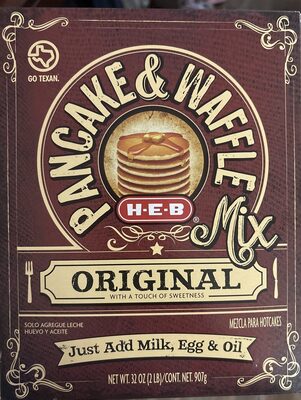 H E Butt Grocery Company
Original Pancake & Waffle Mix, Original
High in sodium — 22% DV per serving
350kcal
7.5Protein
2.5Fat
75Carbs
Pioneer Flour Mills
Oatmeal Pancake & Waffle Complete Mix, Oatmeal
375kcal
10Protein
2.5Fat
82.5Carbs
C. H. Guenther and Son Inc.
Pioneer 2.2 oz. Butter Flavored Biscuit Dough
High in sodium — 30% DV per serving
High in saturated fat — 30% DV per serving
323kcal
4.8Protein
14.5Fat
40.3Carbs
H E Butt Grocery Company
Original Complete Pancake & Waffle Mix, Original
High in sodium — 22% DV per serving
350kcal
7.5Protein
2.5Fat
75Carbs
H E Butt Grocery Company
Original Pancake & Waffle Mix, Original
High in sodium — 22% DV per serving
350kcal
7.5Protein
2.5Fat
75Carbs
Pioneer Flour Mills
Oatmeal Pancake & Waffle Complete Mix, Oatmeal
375kcal
10Protein
2.5Fat
82.5Carbs
C. H. Guenther and Son Inc.
Pioneer 2.2 oz. Butter Flavored Biscuit Dough
High in sodium — 30% DV per serving
High in saturated fat — 30% DV per serving
323kcal
4.8Protein
14.5Fat
40.3Carbs
H E Butt Grocery Company
Original Complete Pancake & Waffle Mix, Original
High in sodium — 22% DV per serving
350kcal
7.5Protein
2.5Fat
75Carbs
Auto-generated content. This description was generated automatically and is pending editorial review. Inaccuracies are possible. Found a mistake? Contact us.