Creme De Mint Cups
What is Creme De Mint Cups?
Creme De Mint Cups are small confectionery pieces, often found in ice cream. They typically consist of a mint-flavored center, which may be creamy, sometimes coated in a chocolate-like shell. These cups are made from ingredients like sugar, vegetable oils, milk solids, and mint flavorings.
Is Creme De Mint Cups vegan?
No. Creme De Mint Cups is animal-derived, so it is not vegan.
Is Creme De Mint Cups a major allergen?
These cups commonly contain milk and soy ingredients.
What is Creme De Mint Cups used for?
Manufacturers add Creme De Mint Cups to products like ice cream and frozen yogurt to provide a distinct mint flavor, a contrasting texture, and visual appeal.
Is Creme De Mint Cups safe?
Creme De Mint Cups are a food component, not a food additive, and therefore are not subject to FDA approval as an additive or GRAS status.
Why it's used
Manufacturers add Creme De Mint Cups to products like ice cream and frozen yogurt to provide a distinct mint flavor, a contrasting texture, and visual appeal. They serve as an inclusion, enhancing the overall sensory experience of the dessert.
Health notes
Creme De Mint Cups are a food component, not a food additive, and therefore are not subject to FDA approval as an additive or GRAS status. As a confectionery item, they contribute to the total intake of added sugars and fats. The Dietary Guidelines for Americans (2025-2030) recommend no specific amount of added sugars, but suggest at most 10 grams per meal.
Allergen info
These cups commonly contain milk and soy ingredients. They may also be processed on equipment that handles tree nuts, peanuts, or wheat.
Foods that contain Creme De Mint Cups
Compare products →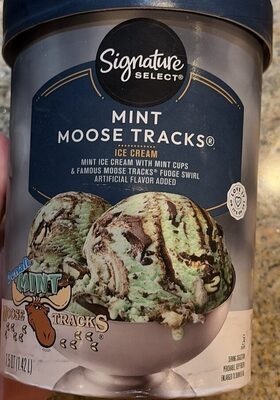 Safeway, Inc.
Mint Moose Tracks Flavor Mint Ice Cream With Creme De Mint Cups & Famous Moose Tracks Fudge Swirl, Mint Moose Tracks
High in saturated fat — 35% DV per serving
High in added sugars — 34% DV per serving
258kcal
3.4Protein
14.6Fat
29.2Carbs
Super Store Industries
Ice Cream, Denali Mint Moose Tracks
High in saturated fat — 23% DV per serving
254kcal
3.0Protein
13.4Fat
28.4Carbs
Safeway, Inc.
Reduced Fat Ice Cream, Mint Moose Tracks
High in saturated fat — 23% DV per serving
High in added sugars — 32% DV per serving
235kcal
4.9Protein
11.1Fat
30.9Carbs
Safeway, Inc.
Mint Moose Tracks Flavor Mint Ice Cream With Creme De Mint Cups & Famous Moose Tracks Fudge Swirl, Mint Moose Tracks
High in saturated fat — 35% DV per serving
High in added sugars — 34% DV per serving
258kcal
3.4Protein
14.6Fat
29.2Carbs
Super Store Industries
Ice Cream, Denali Mint Moose Tracks
High in saturated fat — 23% DV per serving
254kcal
3.0Protein
13.4Fat
28.4Carbs
Safeway, Inc.
Reduced Fat Ice Cream, Mint Moose Tracks
High in saturated fat — 23% DV per serving
High in added sugars — 32% DV per serving
235kcal
4.9Protein
11.1Fat
30.9Carbs
Auto-generated content. This description was generated automatically and is pending editorial review. Inaccuracies are possible. Found a mistake? Contact us.