D-glucose
Auto-generated content. This description was generated automatically and is pending editorial review. Inaccuracies are possible. Found a mistake? Contact us.
What it is
D-glucose, also known as dextrose, is a simple sugar (monosaccharide) and a primary source of energy for living organisms. It is naturally present in fruits, honey, and plants. In food production, it is typically manufactured from starches, such as corn, wheat, or rice, through a process called enzymatic hydrolysis.
Why it's used
Manufacturers add D-glucose primarily as a sweetener to enhance taste and as an energy source. It is commonly found in confectionery, baked goods, sports drinks, and dietary supplements. It can also contribute to browning reactions and texture in certain food products.
Health notes
D-glucose is generally recognized as safe (GRAS) by the FDA. As a sugar, consuming D-glucose contributes to the total amount of added sugars in the diet. The 2025-2030 Dietary Guidelines for Americans recommend no specific amount of added sugars, advising at most 10 grams of added sugars per meal. JECFA has not set a specific acceptable daily intake (ADI) for D-glucose, as it is a fundamental macronutrient rather than a food additive requiring such evaluation. Excessive intake of any sugar can contribute to health issues like weight gain and dental cavities.
Allergen info
Not a major allergen. While it can be derived from corn or wheat starch, the purification process typically removes allergenic proteins.
Products containing D-glucose
Compare products →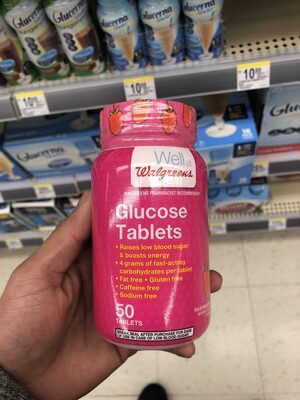 Walgreens Co.
Glucose Tablets, Raspberry
375kcal
0Protein
0Fat
100Carbs
Wal-Mart Stores, Inc.
Fruit Punch
375kcal
0Protein
0Fat
100Carbs
Wal-Mart Stores, Inc.
Glucose Tablets, Fruit Punch
444kcal
0Protein
0Fat
88.9Carbs
Walgreens Co.
Glucose Tablets, Raspberry
375kcal
0Protein
0Fat
100Carbs
Wal-Mart Stores, Inc.
Fruit Punch
375kcal
0Protein
0Fat
100Carbs
Wal-Mart Stores, Inc.
Glucose Tablets, Fruit Punch
444kcal
0Protein
0Fat
88.9Carbs