Encased In Pork Casing
Auto-generated content. This description was generated automatically and is pending editorial review. Inaccuracies are possible. Found a mistake? Contact us.
What it is
This ingredient refers to the outer skin of sausages and hot dogs, which is made from the cleaned intestines of animals, most commonly pigs. The meat mixture is stuffed into these casings, which are then linked and cooked. The casing holds the shape of the processed meat product.
Why it's used
Casings are used to contain processed meat products like sausages, hot dogs, and bratwurst. They provide a barrier that helps the product cook evenly and retain its shape and moisture. The casing can often be eaten with the product, though some types are removed before serving.
Health notes
The FDA considers natural casings, such as those made from pork, to be safe for consumption when properly prepared. They are not typically associated with significant health concerns when consumed as part of a balanced diet. Regulatory bodies like JECFA and EFSA have not raised specific concerns about natural casings.
Allergen info
Pork casings are derived from animals and are not one of the 9 FDA major allergens. They do not contain gluten.
Products containing Encased In Pork Casing
Compare products →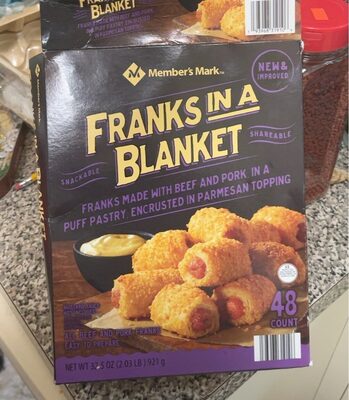 Sam's Club West
Franks In A Blanket Made With Beef And Pork, In A Puff Pastry, Encrusted In Parmesan Topping, Beef And Pork
High in sodium — 26% DV per serving
High in saturated fat — 35% DV per serving
286kcal
11.7Protein
23.4Fat
19.5Carbs
Sam's Club West
Franks In A Blanket Made With Beef And Pork, In A Puff Pastry, Encrusted In Parmesan Topping, Beef And Pork
High in sodium — 26% DV per serving
High in saturated fat — 35% DV per serving
286kcal
11.7Protein
23.4Fat
19.5Carbs
 Fredericksburg Lockers Inc
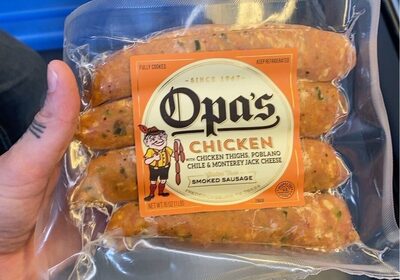
Chicken With Chicken Thighs, Poblano Chile & Monterey Jack Cheese Smoked Sausage, Chicken
High in sodium — 24% DV per serving
161kcal
16.1Protein
8.9Fat
3.6Carbs
Fredericksburg Lockers Inc
Chicken With Chicken Thighs, Poblano Chile & Monterey Jack Cheese Smoked Sausage, Chicken
High in sodium — 24% DV per serving
161kcal
16.1Protein
8.9Fat
3.6Carbs