Encased In Sheep Casing
What is Encased In Sheep Casing?
A natural casing for sausages and hot dogs, made from the cleaned intestines of sheep. The casing is typically salted or dried for preservation before being rehydrated and used to encase ground meat mixtures. This natural casing gives the finished product a characteristic 'snap' when bitten.
Is Encased In Sheep Casing vegan?
No. Encased In Sheep Casing is animal-derived, so it is not vegan.
Is Encased In Sheep Casing gluten-free?
It does not contain gluten.
Is Encased In Sheep Casing a major allergen?
Not a major allergen.
What is Encased In Sheep Casing used for?
Manufacturers use sheep casings to hold ground meat mixtures together in sausages, hot dogs, and bratwurst.
Is Encased In Sheep Casing safe?
Sheep casings are a traditional food ingredient and are generally considered safe for consumption.
Why it's used
Manufacturers use sheep casings to hold ground meat mixtures together in sausages, hot dogs, and bratwurst. The casing's primary function is containment, but it also contributes to the texture and eating experience of the final product. They are commonly found in fresh or smoked sausages.
Health notes
Sheep casings are a traditional food ingredient and are generally considered safe for consumption. They are not subject to the same regulatory oversight as food additives. No specific health concerns are associated with their typical consumption. They are not evaluated by bodies like JECFA or EFSA as they are a whole food ingredient.
Allergen info
Not a major allergen. It does not contain gluten.
Foods that contain Encased In Sheep Casing
Compare products →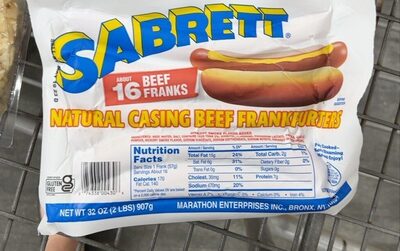 Marathon Enterprises Inc.
Natural Casing Beef Frankfurters
High in sodium — 20% DV per serving
High in saturated fat — 30% DV per serving
298kcal
12.3Protein
26.3Fat
3.5Carbs
Marathon Enterprises Inc.
Sabrett, Beef Frankfurters
High in sodium — 20% DV per serving
High in saturated fat — 30% DV per serving
298kcal
12.3Protein
26.3Fat
3.5Carbs
Marathon Enterprises Inc.
Natural Casing Beef Frankfurters
High in sodium — 20% DV per serving
High in saturated fat — 30% DV per serving
298kcal
12.3Protein
26.3Fat
3.5Carbs
Marathon Enterprises Inc.
Natural Casing Beef Frankfurters
High in sodium — 20% DV per serving
High in saturated fat — 30% DV per serving
298kcal
12.3Protein
26.3Fat
3.5Carbs
Marathon Enterprises Inc.
Sabrett, Beef Frankfurters
High in sodium — 20% DV per serving
High in saturated fat — 30% DV per serving
298kcal
12.3Protein
26.3Fat
3.5Carbs
Marathon Enterprises Inc.
Natural Casing Beef Frankfurters
High in sodium — 20% DV per serving
High in saturated fat — 30% DV per serving
298kcal
12.3Protein
26.3Fat
3.5Carbs
Auto-generated content. This description was generated automatically and is pending editorial review. Inaccuracies are possible. Found a mistake? Contact us.