Fig Balsamic Vinegar
Auto-generated content. This description was generated automatically and is pending editorial review. Inaccuracies are possible. Found a mistake? Contact us.
What it is
Fig balsamic vinegar is a condiment made by combining balsamic vinegar with figs or fig flavoring. Balsamic vinegar itself is a dark, concentrated vinegar traditionally made from grape must in Italy. The addition of figs imparts a fruity sweetness and aroma.
Why it's used
Manufacturers use fig balsamic vinegar primarily as a flavoring agent and sweetener in a variety of foods. Its sweet and tangy profile makes it popular in salad dressings, marinades, sauces, and glazes, often complementing both savory and sweet dishes.
Health notes
Fig balsamic vinegar is generally recognized as safe (GRAS) by the FDA when used as a food ingredient. It is not typically associated with significant health concerns when consumed in moderation as part of a balanced diet. International bodies like JECFA and EFSA have evaluated balsamic vinegar and its components, but specific evaluations of 'fig balsamic vinegar' as a distinct product are not widely documented. Evidence does not suggest adverse effects at typical dietary levels.
Allergen info
Fig balsamic vinegar is not derived from any of the nine FDA major allergens. It does not contain gluten.
Products containing Fig Balsamic Vinegar
Compare products →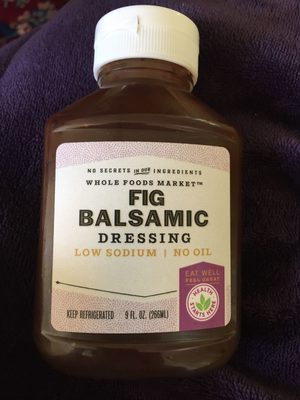 Finesse Records
Whole Foods Market, Fig Balsamic Dressing
100kcal
0Protein
0Fat
23.3Carbs
Finesse Records
Whole Foods Market, Fig Balsamic Dressing
100kcal
0Protein
0Fat
23.3Carbs