Fresh Turmeric
Auto-generated content. This description was generated automatically and is pending editorial review. Inaccuracies are possible. Found a mistake? Contact us.
What it is
Fresh turmeric is a bright orange-yellow rhizome, or underground stem, of the plant *Curcuma longa*. It is native to Southeast Asia and India, where it has been used for centuries as a spice and a coloring agent. The rhizome is typically harvested, cleaned, and then sold fresh or dried and ground into a powder.
Why it's used
Fresh turmeric is primarily used to impart a warm, earthy flavor and a vibrant yellow-orange color to foods. It is a key ingredient in many curries, stews, and rice dishes, particularly in South Asian, Southeast Asian, and Middle Eastern cuisines. It can also be used in marinades, rubs, and even beverages.
Health notes
Fresh turmeric is generally recognized as safe (GRAS) by the FDA when used as a food ingredient. The active compound in turmeric, curcumin, has been studied for its potential antioxidant and anti-inflammatory properties. While research is ongoing, current evidence does not support claims of turmeric curing or preventing disease. JECFA has evaluated turmeric and its extracts, and EFSA has also assessed its safety. At typical dietary levels, it is considered safe.
Allergen info
Turmeric is not one of the nine FDA major allergens and does not contain gluten.
Products containing Fresh Turmeric
Compare products →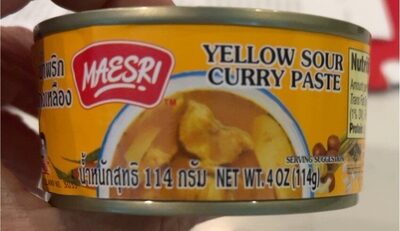 MAESRI
Maesri, Yellow Sour Curry Paste
High in sodium — 56% DV per serving
83kcal
8.3Protein
1.4Fat
11.1Carbs
MAESRI
Maesri, Yellow Sour Curry Paste
High in sodium — 56% DV per serving
83kcal
8.3Protein
1.4Fat
11.1Carbs
 MAESRI
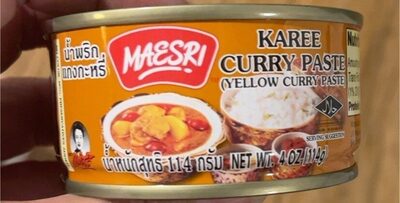
Maesri, Yellow Curry Paste
High in sodium — 25% DV per serving
176kcal
0Protein
8.8Fat
23.5Carbs
CAFE SPICE
Yellow Tofu Curry With Thai Fried Rice, Medium
High in saturated fat — 50% DV per serving
163kcal
3.5Protein
6.6Fat
23.4Carbs
Naam Som LLC
Full Strength Drinking Vinegar, Turmeric
194kcal
0Protein
0Fat
47.2Carbs
MAESRI
Maesri, Yellow Curry Paste
High in sodium — 25% DV per serving
176kcal
0Protein
8.8Fat
23.5Carbs
CAFE SPICE
Yellow Tofu Curry With Thai Fried Rice, Medium
High in saturated fat — 50% DV per serving
163kcal
3.5Protein
6.6Fat
23.4Carbs
Naam Som LLC
Full Strength Drinking Vinegar, Turmeric
194kcal
0Protein
0Fat
47.2Carbs
 Deep Foods Inc.
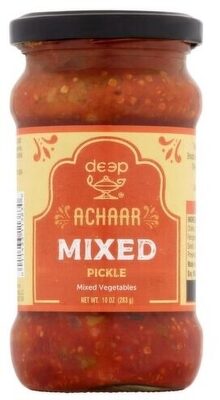
Deep, Mixed Pickle
High in sodium — 38% DV per serving
175kcal
0Protein
10Fat
20Carbs
Deep Foods Inc.
Amba Haldar Fresh Turmeric Pickle
High in sodium — 35% DV per serving
62kcal
0Protein
0Fat
12.5Carbs
Deep Foods Inc.
Deep, Mixed Pickle
High in sodium — 38% DV per serving
175kcal
0Protein
10Fat
20Carbs
Deep Foods Inc.
Amba Haldar Fresh Turmeric Pickle
High in sodium — 35% DV per serving
62kcal
0Protein
0Fat
12.5Carbs