Auto-generated content.
This description was generated automatically and is pending editorial review.
Inaccuracies are possible. Found a mistake? Contact us.
Source
Unknown
Not yet classified by editors
Allergen
No
Role in food
Manufacturers use hickory smoke flavoring to impart a desirable smoky taste and aroma to …
What it is
Hickory smoke flavoring is a liquid or powder that adds a smoky taste to foods without actual smoking. It is made by burning hickory wood and capturing the smoke, then condensing it into a liquid or drying it into a powder. This process allows for a consistent smoky flavor that is easier to control than traditional smoking methods.
Why it's used
Manufacturers use hickory smoke flavoring to impart a desirable smoky taste and aroma to a wide variety of products. It is commonly found in processed meats like jerky and bacon, as well as in snacks, sauces, and cheeses where a smoky profile is desired.
Health notes
Hickory smoke flavoring is generally recognized as safe (GRAS) by the FDA for use in food. The Joint FAO/WHO Expert Committee on Food Additives (JECFA) has evaluated smoke flavorings, and the European Food Safety Authority (EFSA) has also assessed them. While some studies have looked into compounds found in smoke, the levels present in foods using approved flavorings are typically very low and not considered a health concern at normal consumption levels.
Allergen info
Hickory smoke flavoring is not derived from any of the 9 major allergens and does not contain gluten.
Note:
This site presents label data from USDA FoodData Central for general information. It is not medical advice.
Check the package label; formulations change.
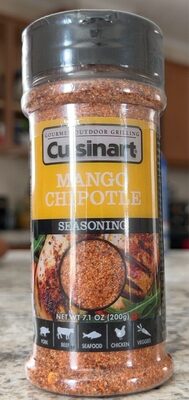 Jordan Kahn Co
Mango Chipotle Seasoning, Mango Chipotle
385kcal
0Protein
0Fat
76.9Carbs
Jordan Kahn Co
Mango Chipotle Seasoning, Mango Chipotle
385kcal
0Protein
0Fat
76.9Carbs