In Calcium Alginate Casing
What is In Calcium Alginate Casing?
Calcium alginate is a salt derived from alginic acid, which is a natural substance found in brown seaweed. It is produced by reacting alginic acid with a calcium salt. This process creates a gel-like substance that can be formed into casings or other shapes.
Is In Calcium Alginate Casing vegan?
In Calcium Alginate Casing is not animal-derived. Products that contain it can still include other animal-derived ingredients, so check the full ingredient list.
Is In Calcium Alginate Casing gluten-free?
It does not contain gluten.
Is In Calcium Alginate Casing a major allergen?
Calcium alginate is derived from seaweed and is not a major allergen.
What is In Calcium Alginate Casing used for?
Manufacturers use calcium alginate to create edible casings for processed meats like sausages and hot dogs.
Is In Calcium Alginate Casing safe?
Calcium alginate is generally recognized as safe (GRAS) by the FDA for use in food.
Why it's used
Manufacturers use calcium alginate to create edible casings for processed meats like sausages and hot dogs. Its gel-forming properties allow it to hold its shape and provide a smooth texture. It is also used as a thickener and stabilizer in some food products.
Health notes
Calcium alginate is generally recognized as safe (GRAS) by the FDA for use in food. It is a source of dietary fiber and is not known to have adverse health effects at typical consumption levels. International bodies like JECFA and EFSA have evaluated alginates and found them to be safe.
Allergen info
Calcium alginate is derived from seaweed and is not a major allergen. It does not contain gluten.
Foods that contain In Calcium Alginate Casing
Compare products →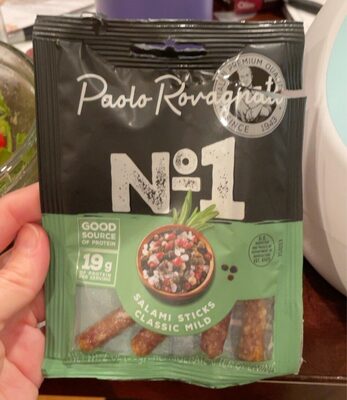 Rovagnati NorthAmerica, LLC
Classic Mild Salami Sticks, Classic Mild
464kcal
33.9Protein
35.7Fat
1.8Carbs
Specialties Agro-Alimentation
Spanish Mini Chorizos (Sausages) With Spicy Paprika Imported Spanish Tapas, Spanish Mini Chorizos (Sausages) With Spicy Paprika
High in sodium — 22% DV per serving
High in saturated fat — 20% DV per serving
338kcal
10Protein
30Fat
0Carbs
Rovagnati NorthAmerica, LLC
Hot & Spicy Salami Sticks, Hot & Spicy
464kcal
33.9Protein
35.7Fat
1.8Carbs
Rovagnati NorthAmerica, LLC
Classic Mild Salami Sticks, Classic Mild
464kcal
33.9Protein
35.7Fat
1.8Carbs
Specialties Agro-Alimentation
Spanish Mini Chorizos (Sausages) With Spicy Paprika Imported Spanish Tapas, Spanish Mini Chorizos (Sausages) With Spicy Paprika
High in sodium — 22% DV per serving
High in saturated fat — 20% DV per serving
338kcal
10Protein
30Fat
0Carbs
Rovagnati NorthAmerica, LLC
Hot & Spicy Salami Sticks, Hot & Spicy
464kcal
33.9Protein
35.7Fat
1.8Carbs
Auto-generated content. This description was generated automatically and is pending editorial review. Inaccuracies are possible. Found a mistake? Contact us.