Less Than 2% Rice Hulls Added To Prevent Caking
Auto-generated content. This description was generated automatically and is pending editorial review. Inaccuracies are possible. Found a mistake? Contact us.
What it is
Rice hulls are the outer protective layers of the rice grain. They are a byproduct of rice milling. The hulls are typically removed from the grain before it is processed for food.
Why it's used
Rice hulls are added to some foods in small amounts to prevent caking. They act as an anti-caking agent, absorbing moisture and keeping powders from clumping together. They are often found in dried or powdered food products.
Health notes
Rice hulls are generally recognized as safe (GRAS) by the FDA for use as an anti-caking agent. They are primarily composed of fiber and are not absorbed by the body. International bodies like JECFA have evaluated similar anti-caking agents, and they are considered safe when used as intended. There is no evidence to suggest adverse health effects from consuming typical amounts of rice hulls.
Allergen info
Rice is not one of the nine major allergens. It is also gluten-free.
Products containing Less Than 2% Rice Hulls Added To Prevent Caking
Compare products →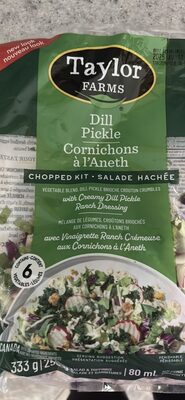 Taylor Fresh Foods, Inc.
Dill Pickle Chopped Kit, Dill Pickle
150kcal
3Protein
11Fat
11Carbs
Wegmans Food Markets, Inc.
Dill Pickle Shredded Cauliflower, Crinkle Cut Radnish, Green & Red Cabbage, Green Leaf Lettuce, Kale, Dill Pickle Brioche Crouton Crumbles With Creamy Dill Pickle Ranch Dressing Chopped Salad Kit, Dill Pickle
150kcal
—Protein
11Fat
11Carbs
Target Stores
Dill-Licious Iceberg & Green Leaf Lettuce Blend, Seasoned Roasted White-Meat Chicken, Swiss Cheese, Uncured Bacon & Dill Pickle Brioche Crouton Crumbles With Dill Pickle Ranch Dressing Salad, Dill-Licious
High in sodium — 35% DV per serving
High in saturated fat — 35% DV per serving
202kcal
9.8Protein
15.3Fat
8.0Carbs
Taylor Fresh Foods, Inc.
Dill Pickle Chopped Kit, Dill Pickle
150kcal
3Protein
11Fat
11Carbs
Wegmans Food Markets, Inc.
Dill Pickle Shredded Cauliflower, Crinkle Cut Radnish, Green & Red Cabbage, Green Leaf Lettuce, Kale, Dill Pickle Brioche Crouton Crumbles With Creamy Dill Pickle Ranch Dressing Chopped Salad Kit, Dill Pickle
150kcal
—Protein
11Fat
11Carbs
Target Stores
Dill-Licious Iceberg & Green Leaf Lettuce Blend, Seasoned Roasted White-Meat Chicken, Swiss Cheese, Uncured Bacon & Dill Pickle Brioche Crouton Crumbles With Dill Pickle Ranch Dressing Salad, Dill-Licious
High in sodium — 35% DV per serving
High in saturated fat — 35% DV per serving
202kcal
9.8Protein
15.3Fat
8.0Carbs
 Target Stores
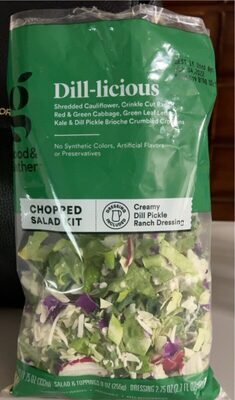
Dill-Licious Shredded Cauliflower, Crinkle Cut Radish, Red & Green Cabbage, Green Leaf Lettuce, Kale & Dill Pickle Brioche Crumbled Croutons Chopped Salad Kit With Creamy Dill Pickle Ranch Dressing, Dill-Licious
150kcal
3Protein
11Fat
11Carbs
Target Stores
Dill-Licious Shredded Cauliflower, Crinkle Cut Radish, Red & Green Cabbage, Green Leaf Lettuce, Kale & Dill Pickle Brioche Crumbled Croutons Chopped Salad Kit With Creamy Dill Pickle Ranch Dressing, Dill-Licious
150kcal
3Protein
11Fat
11Carbs
 Taylor Fresh Foods, Inc.
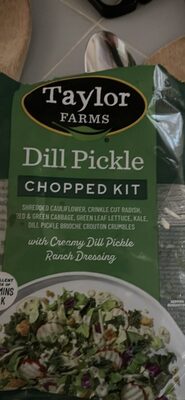
Dill Pickle Chopped Kit, Dill Pickle
150kcal
3Protein
11Fat
11Carbs
Taylor Fresh Foods, Inc.
Dill Pickle Chopped Kit, Dill Pickle
150kcal
3Protein
11Fat
11Carbs