Made In Beef Collagen Casing
Auto-generated content. This description was generated automatically and is pending editorial review. Inaccuracies are possible. Found a mistake? Contact us.
What it is
Beef collagen casings are made from the collagen found in the connective tissues of cattle. This collagen is processed and formed into a tube, which is then filled with meat mixture to create sausages, hot dogs, and similar products. These casings are edible and provide the familiar 'snap' when bitten.
Why it's used
Manufacturers use beef collagen casings to hold meat products together during cooking and processing. They are chosen for their ability to be easily stuffed, their uniform size, and their edible nature, which simplifies packaging and consumption. They are commonly found in sausages, hot dogs, bratwurst, and some types of jerky.
Health notes
Beef collagen casings are generally recognized as safe (GRAS) by the FDA for use in food. They are primarily composed of protein and are digested like other food proteins. International bodies like JECFA have evaluated collagen, but no specific health concerns are associated with its consumption in typical amounts found in food casings. There are no widespread controversies regarding their use.
Allergen info
Not a major allergen. Beef collagen is derived from cattle, which is not one of the nine major allergens.
Products containing Made In Beef Collagen Casing
Compare products →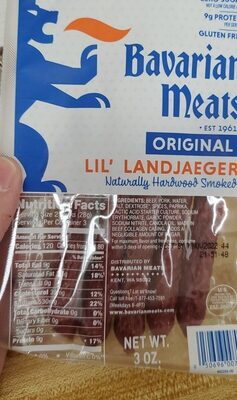 Bavarian Meat Products Inc.
Original Hardwood Smoked Lil' Landjaeger, Original
High in sodium — 23% DV per serving
429kcal
32.1Protein
32.1Fat
0Carbs
Bavarian Meat Products Inc.
Original Hardwood Smoked Lil' Landjaeger, Original
High in sodium — 23% DV per serving
429kcal
32.1Protein
32.1Fat
0Carbs
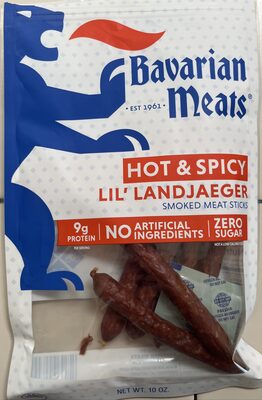 Bavarian Meat Products Inc.
Hot & Spicy Hardwood Smoked Lil' Landjaeger, Hot & Spicy
High in sodium — 22% DV per serving
429kcal
32.1Protein
32.1Fat
0Carbs
Bavarian Meat Products Inc.
Hot & Spicy Hardwood Smoked Lil' Landjaeger, Hot & Spicy
High in sodium — 22% DV per serving
429kcal
32.1Protein
32.1Fat
0Carbs
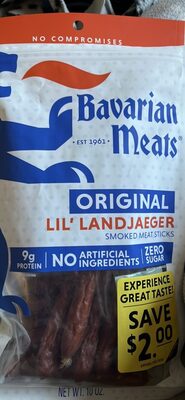 Bavarian Meat Products Inc.
Original Lil' Landjaeger, Original
High in sodium — 23% DV per serving
429kcal
32.1Protein
32.1Fat
0Carbs
Oberto Sausage Company
Original Double Smoked Sausages
High in saturated fat — 22% DV per serving
500kcal
25Protein
39.3Fat
7.1Carbs
Oberto Sausage Company
Double Smoked Xl Size Sausage
High in sodium — 33% DV per serving
High in saturated fat — 40% DV per serving
High in cholesterol — 22% DV per serving
481kcal
24.1Protein
38.9Fat
9.3Carbs
Thomas Hammer Coffee
American Wagyu Beef Smoked Sausages Sticks, American Wagyu Beef
480kcal
20Protein
44Fat
4Carbs
Bavarian Meat Products Inc.
Original Lil' Landjaeger, Original
High in sodium — 23% DV per serving
429kcal
32.1Protein
32.1Fat
0Carbs
Oberto Sausage Company
Original Double Smoked Sausages
High in saturated fat — 22% DV per serving
500kcal
25Protein
39.3Fat
7.1Carbs
Oberto Sausage Company
Double Smoked Xl Size Sausage
High in sodium — 33% DV per serving
High in saturated fat — 40% DV per serving
High in cholesterol — 22% DV per serving
481kcal
24.1Protein
38.9Fat
9.3Carbs
Thomas Hammer Coffee
American Wagyu Beef Smoked Sausages Sticks, American Wagyu Beef
480kcal
20Protein
44Fat
4Carbs